
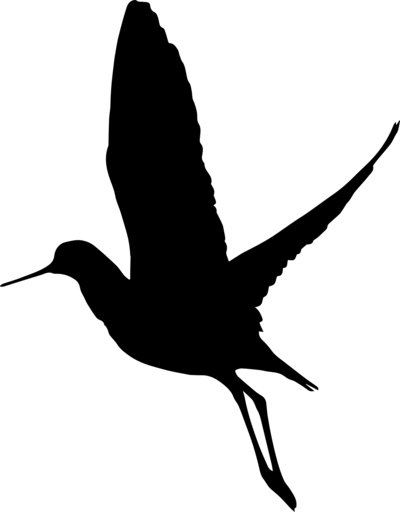
Banded Stilt
Cladorhynchus leucocephalus
Silhouette: T. Michael Keesey, from a photograph by Ed Dunens · PhyloPic
- KingdomAnimalia (Animals)
- PhylumChordata (Chordates)
- ClassAves (Birds)
- OrderCharadriiformes (Shorebirds and Allies)
- FamilyRecurvirostridae (Stilts and Avocets)
- GenusCladorhynchus
- SpeciesCladorhynchus leucocephalus (Banded Stilt)
About the Banded Stilt
The banded stilt (Cladorhynchus leucocephalus) is a wader of the stilt and avocet family, Recurvirostridae, native to Australia. It belongs to the monotypic genus Cladorhynchus. It gets its name from the red-brown breast band found on breeding adults, though this is mottled or entirely absent in non-breeding adults and juveniles. Its remaining plumage is pied and the eyes are dark brown. Nestling banded stilts have white down, unlike any other species of wader.
Breeding is triggered by the filling of inland salt lakes by rainfall, creating large shallow lakes rich in tiny shrimp on which the birds feed. A nomadic species, banded stilts migrate to these lakes in large numbers and assemble in large breeding colonies. The female lays three to four brown- or black-splotched whitish eggs on a scrape. If conditions are favourable, a second brood might be laid, though if the lakes dry up prematurely the breeding colonies may be abandoned.
The banded stilt is considered to be a species of least concern by the International Union for Conservation of Nature (IUCN). Under the South Australian National Parks and Wildlife Act 1972, however, this bird is considered to be Vulnerable. This is due to the predation of it by silver gulls, which are considered to be a serious threat. Black falcons and wedge-tailed eagles are also predators, taking the banded stilt and its young. Wikipedia →
Recent sightings of Banded Stilt in Uluru-Kata Tjuta National Park
LIVEiNaturalistClosest Relatives at Uluru-Kata Tjuta National Park

 Little Buttonquail
Turnix velox

 Wood Sandpiper
Tringa glareola

 Common Sandpiper
Actitis hypoleucos

 Red-kneed Dotterel
Erythrogonys cinctus

Common Greenshank
Tringa nebularia

 Banded Lapwing
Vanellus tricolor

 Eastern Sand Plover
Charadrius veredus

 Sharp-tailed Sandpiper
Calidris acuminata

 Oriental Pratincole
Glareola maldivarum

Australian Pratincole
Stiltia isabella
Global Distribution
Warmer areas are where this animal is recorded most often.
Parks Where Found
| # | Park | Country | Daily sighting probability |
|---|---|---|---|
| 1 | Ningaloo Marine Park | 🇦🇺 Australia | |
| 2 | Cape Range | 🇦🇺 Australia | |
| 3 | Uluru-Kata Tjuta National Park | 🇦🇺 Australia | |
| 4 | Grampians National Park | 🇦🇺 Australia | |
| 5 | Great Otway National Park | 🇦🇺 Australia |