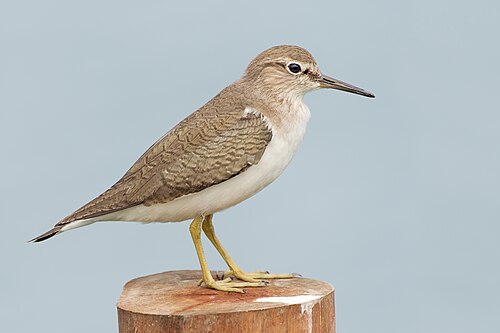



Common Sandpiper
Actitis hypoleucos
Silhouette: Rebecca Groom · PhyloPic
- KingdomAnimalia (Animals)
- PhylumChordata (Chordates)
- ClassAves (Birds)
- OrderCharadriiformes (Shorebirds and Allies)
- FamilyScolopacidae (Sandpipers and Allies)
- GenusActitis (Common and Spotted Sandpipers)
- SpeciesActitis hypoleucos (Common Sandpiper)
About the Common Sandpiper
The common sandpiper (Actitis hypoleucos) is a small Palearctic wader. This bird and its American sister species, the spotted sandpiper (A. macularia), make up the genus Actitis. They are parapatric and replace each other geographically; stray birds of either species may settle down with breeders of the other and hybridize. Hybridization has also been reported between the common sandpiper and the green sandpiper, a member of the closely related genus Tringa.
The common sandpiper was formally described by the Swedish naturalist Carl Linnaeus in 1758 in the tenth edition of his Systema Naturae under the binomial name Tringa hypoleucos. The species is now placed together with the spotted sandpiper in the genus Actitis that was introduced in 1811 by the German zoologist Johann Karl Wilhelm Illiger. The genus name Actitis is from Ancient Greek aktites meaning "coast-dweller" from akte meaning "coast". The specific epithet hypoleucos combines the Ancient Greek hupo meaning "beneath" with leukos meaning "white". The species is monotypic and no subspecies are recognised.
The adult is 18–20 cm (7.1–7.9 in) long with a 32–35 cm (13–14 in) wingspan. It has greyish... Wikipedia →
Recent sightings of Common Sandpiper in Uluru-Kata Tjuta National Park
LIVEiNaturalistClosest Relatives at Uluru-Kata Tjuta National Park

 Wood Sandpiper
Tringa glareola

Common Greenshank
Tringa nebularia

 Sharp-tailed Sandpiper
Calidris acuminata

 Little Buttonquail
Turnix velox

 Red-kneed Dotterel
Erythrogonys cinctus

 Banded Stilt
Cladorhynchus leucocephalus

 Banded Lapwing
Vanellus tricolor

 Eastern Sand Plover
Charadrius veredus

 Oriental Pratincole
Glareola maldivarum

Australian Pratincole
Stiltia isabella
Global Distribution
Warmer areas are where this animal is recorded most often.