



Giant Otter
Pteronura brasiliensis
Silhouette: Margot Michaud · PhyloPic
- KingdomAnimalia (Animals)
- PhylumChordata (Chordates)
- ClassMammalia (Mammals)
- OrderCarnivora (Carnivorans)
- FamilyMustelidae (Mustelids)
- GenusPteronura (Giant Otters)
- SpeciesPteronura brasiliensis (Giant Otter)
About the Giant Otter
The giant otter or giant river otter (Pteronura brasiliensis) is a South American carnivorous mammal. It is the longest member of the weasel family, Mustelidae, reaching up to 1.8 m (5 ft 11 in). Atypical of mustelids, the giant otter is a social species, with family groups typically supporting three to eight members. The groups are centered on a dominant breeding pair and are extremely cohesive and cooperative. Although generally peaceful, the species is territorial, and aggression has been observed between groups. The giant otter is diurnal, being active exclusively during daylight hours. It is the noisiest otter species, and distinct vocalizations have been documented that indicate alarm, aggression, and reassurance.
The giant otter ranges across north-central South America; it lives mostly in and along the Amazon River and in the Pantanal. Its distribution has been greatly reduced and is now discontinuous. Decades of poaching for its velvety pelt, peaking in the 1950s and 1960s, considerably diminished population numbers. The species was listed as endangered in 1999 and wild population estimates are typically below 5,000. The Guianas are one of the last real strongholds for the species, which also enjoys modest numbers – and significant protection – in the Peruvian Amazonian basin. It is one of the most endangered mammal species in the Neotropics. Habitat degradation and loss is the greatest current threat. They are also rare in captivity; in 2003, only 60 giant otters were being held.
The giant otter shows a variety of adaptations suitable to an amphibious lifestyle, including exceptionally dense fur, a wing-like tail, and webbed feet. The species prefers freshwater rivers and streams, which are usually seasonally flooded, and may also take to freshwater lakes and springs. It constructs extensive campsites close to feeding areas, clearing large amounts of vegetation. The giant otter subsists almost exclusively on a diet of fish, particularly characins and catfish, but may also eat crabs, turtles, snakes and small caimans. It has no serious natural predators other than humans, although it must compete with other predators, such as the Neotropical otters and various crocodilian species, for food resources. Wikipedia →
Recent sightings of Giant Otter in Yasuní National Park
LIVEiNaturalistClosest Relatives at Yasuní National Park

 Tayra
Tayra
Eira barbara

 Neotropical Otter
Lontra longicaudis

 Jaguar
Panthera onca

 Kinkajou
Potos flavus

 South American Coati
Nasua nasua

 Ocelot
Leopardus pardalis

 Mountain Lion
Puma concolor

 Crab-eating Raccoon
Procyon cancrivorus
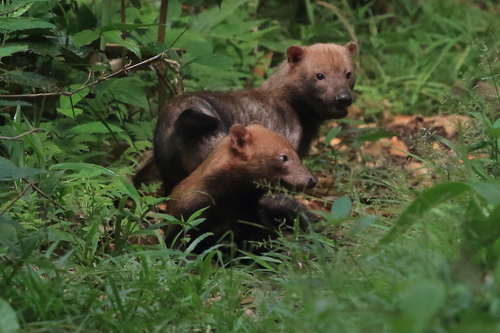
 Bush Dog
Speothos venaticus

 Short-eared Dog
Atelocynus microtis

 Crab-eating Fox
Cerdocyon thous

Margay
Leopardus wiedii
Global Distribution
Warmer areas are where this animal is recorded most often.
Parks Where Found
| # | Park | Country | Daily sighting probability |
|---|---|---|---|
| 1 | Parque Estadual Encontro das Águas | 🇧🇷 Brazil | |
| 2 | Madidi National Park | 🇧🇴 Bolivia | |
| 3 | Cuyabeno Wildlife Reserve | 🇪🇨 Ecuador | |
| 4 | Yasuní National Park | 🇪🇨 Ecuador | |
| 5 | Tambopata National Reserve | 🇵🇪 Peru | |
| 6 | Manu National Park | 🇵🇪 Peru | |
| 7 | Noel Kempff Mercado National Park | 🇧🇴 Bolivia | |
| 8 | Anavilhanas National Park | 🇧🇷 Brazil | |
| 9 | Amacayacu National Natural Park | 🇨🇴 Colombia | |
| 10 | Iberá National Park | 🇦🇷 Argentina |
Quick answers
What are the chances of seeing a Giant Otter in Yasuní National Park?
About 30% of wildlife watchers report a Giant Otter sighting in Yasuní National Park, based on 55 verified sightings from GBIF citizen-science data.
When is the best time to see Giant Otter in Yasuní National Park?
August has the highest sighting rate for Giant Otter in Yasuní National Park in our monthly data.