



South American Coati
Nasua nasua
Silhouette: Rebecca Groom · PhyloPic
- KingdomAnimalia (Animals)
- PhylumChordata (Chordates)
- ClassMammalia (Mammals)
- OrderCarnivora (Carnivorans)
- FamilyProcyonidae (Raccoons, Coatis, and Allies)
- GenusNasua (Coatis)
- SpeciesNasua nasua (South American Coati)
About the South American Coati
The South American coati (Nasua nasua), also known as the ring-tailed coati or brown-nosed coati, is a coati species and a member of the raccoon family (Procyonidae), found in the tropical and subtropical parts of South America. An adult generally weighs from 2–7.2 kg (4.4–15.9 lb) and is 85–113 cm (33–44 in) long, with half of that being its tail. Its color is highly variable and the rings on the tail may be only somewhat visible, but its most distinguishing characteristic is that it lacks the largely white snout (or "nose") of its northern relative, the white-nosed coati.
The South American coati is widespread in tropical and subtropical South America. It occurs in the lowland forests east of the Andes as high as 2,500 m (8,200 ft) from Colombia and The Guianas south to Uruguay and northern Argentina. Nasua nasua occupancy is significantly and negatively related to elevation but positively related to forest cover.
It has been recorded in west Ecuador, and north and west Colombia. In Argentina, it has been recorded in Santa Fe and Salta Provinces. It has been introduced and naturalized on the island of Mallorca, where it is considered an invasive species... Wikipedia →
Recent sightings of South American Coati in Yasuní National Park
LIVEiNaturalistClosest Relatives at Yasuní National Park

 Kinkajou
Potos flavus

 Crab-eating Raccoon
Procyon cancrivorus

 Giant Otter
Pteronura brasiliensis

 Jaguar
Panthera onca

 Tayra
Eira barbara

 Neotropical Otter
Lontra longicaudis

 Ocelot
Leopardus pardalis

 Mountain Lion
Puma concolor
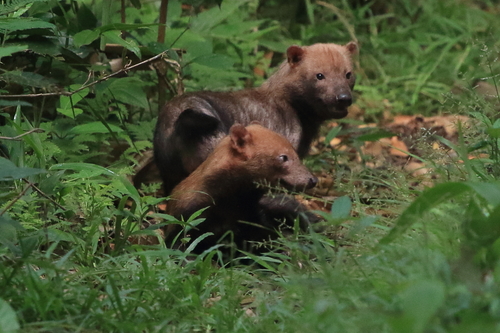
 Bush Dog
Speothos venaticus

 Short-eared Dog
Atelocynus microtis

 Crab-eating Fox
Cerdocyon thous

Margay
Leopardus wiedii
Global Distribution
Warmer areas are where this animal is recorded most often.
Parks Where Found
| # | Park | Country | Daily sighting probability |
|---|---|---|---|
| 1 | Iguazú National Park | 🇦🇷 Argentina | |
| 2 | Iguaçu National Park | 🇧🇷 Brazil | |
| 3 | Tijuca National Park | 🇧🇷 Brazil | |
| 4 | Podocarpus National Park | 🇪🇨 Ecuador | |
| 5 | Serra dos Órgãos National Park | 🇧🇷 Brazil | |
| 6 | Tambopata National Reserve | 🇵🇪 Peru | |
| 7 | Yasuní National Park | 🇪🇨 Ecuador | |
| 8 | Manu National Park | 🇵🇪 Peru | |
| 9 | Cuyabeno Wildlife Reserve | 🇪🇨 Ecuador | |
| 10 | Canaima National Park | 🇻🇪 Venezuela | |
| 11 | Brownsberg Nature Park | 🇸🇷 Suriname | |
| 12 | El Impenetrable National Park | 🇦🇷 Argentina | |
| 13 | Serra da Canastra National Park | 🇧🇷 Brazil | |
| 14 | Parque Estadual Encontro das Águas | 🇧🇷 Brazil | |
| 15 | Sierra de la Macarena National Park | 🇨🇴 Colombia | |
| 16 | Madidi National Park | 🇧🇴 Bolivia | |
| 17 | Itatiaia National Park | 🇧🇷 Brazil | |
| 18 | Chapada Diamantina National Park | 🇧🇷 Brazil | |
| 19 | Los Nevados National Natural Park | 🇨🇴 Colombia |
Quick answers
What are the chances of seeing a South American Coati in Yasuní National Park?
About 10% of wildlife watchers report a South American Coati sighting in Yasuní National Park, based on 8 verified sightings from GBIF citizen-science data.
When is the best time to see South American Coati in Yasuní National Park?
January has the highest sighting rate for South American Coati in Yasuní National Park in our monthly data.