


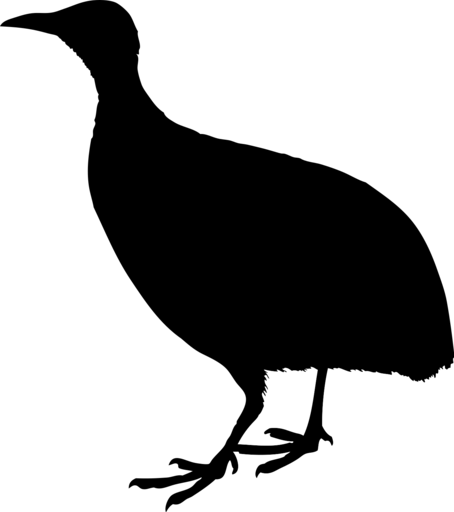
Red-winged Tinamou
Rhynchotus rufescens
Silhouette: George Edward Lodge · PhyloPic
- KingdomAnimalia (Animals)
- PhylumChordata (Chordates)
- ClassAves (Birds)
- OrderTinamiformes (Tinamous)
- FamilyTinamidae (Tinamous)
- GenusRhynchotus (Red-winged Tinamous)
- SpeciesRhynchotus rufescens (Red-winged Tinamou)
About the Red-winged Tinamou
The red-winged tinamou (Rhynchotus rufescens) is a medium-sized ground-living bird from central and eastern South America. Other common names for the species include perdiz grande, rufous tinamou, and ynambu. The red-winged tinamou was formally described in 1815 by the Dutch zoologist Coenraad Jacob Temminck under the binomial name Tinamus rufescens. Temminck based his account on the "Ynambu-guazu" from Brazil that had been described in 1805 by the Spanish naturalist Félix de Azara. The type locality was restricted to São Paulo in Brazil by Carl Eduard Hellmayr in 1929. The specific epithet rufescens is Latin meaning "reddish". The red-winged tinamou is now placed with the huayco tinamou in the genus Rhynchotus that was introduced in 1825 by Johann Baptist von Spix. Its common name refers to the bright rufous primaries, which mainly are visible in flight.
Three subspecies are recognised: R. r. catingae Reiser, 1905 – central, northeast Brazil R. r. pallescens Kothe, 1907 – northeast, central Argentina R. r. rufescens (Temminck, 1815) – north Bolivia to east Brazil, Paraguay, northeast Argentina and Uruguay
All tinamou are from the family Tinamidae, and in the larger... Wikipedia →
Recent sightings of Red-winged Tinamou in Amboró National Park
LIVEiNaturalistClosest Relatives at Amboró National Park

 Huayco Tinamou
Rhynchotus maculicollis

 Undulated Tinamou
Crypturellus undulatus

Grey Tinamou
Tinamus tao

Brown Tinamou
Crypturellus obsoletus

Little Tinamou
Crypturellus soui

Small-billed Tinamou
Crypturellus parvirostris

Tataupá Tinamou
Crypturellus tataupa

White-bellied Nothura
Nothura boraquira

Andean Tinamou
Nothoprocta pentlandii

Black-capped Tinamou
Crypturellus atrocapillus
Global Distribution
Warmer areas are where this animal is recorded most often.
Parks Where Found
| # | Park | Country | Daily sighting probability |
|---|---|---|---|
| 1 | Emas National Park | 🇧🇷 Brazil | |
| 2 | Iberá National Park | 🇦🇷 Argentina | |
| 3 | Serra da Canastra National Park | 🇧🇷 Brazil | |
| 4 | El Palmar National Park | 🇦🇷 Argentina | |
| 5 | Chapada Diamantina National Park | 🇧🇷 Brazil | |
| 6 | Chapada dos Guimarães National Park | 🇧🇷 Brazil | |
| 7 | Madidi National Park | 🇧🇴 Bolivia | |
| 8 | Iguazú National Park | 🇦🇷 Argentina | |
| 9 | Iguaçu National Park | 🇧🇷 Brazil | |
| 10 | Amboró National Park | 🇧🇴 Bolivia | |
| 11 | Parque Estadual Encontro das Águas | 🇧🇷 Brazil |