


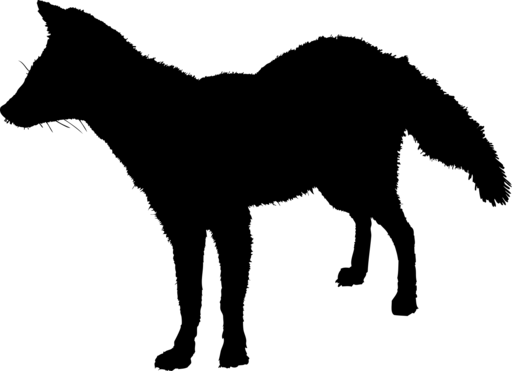
Gray Fox
Urocyon cinereoargenteus
Silhouette: Brian Gratwicke (photo) and T. Michael Keesey (vectorization) · PhyloPic
- KingdomAnimalia (Animals)
- PhylumChordata (Chordates)
- ClassMammalia (Mammals)
- OrderCarnivora (Carnivorans)
- FamilyCanidae (Canids)
- GenusUrocyon (Gray Foxes)
- SpeciesUrocyon cinereoargenteus (Gray Fox)
About the Gray Fox
The gray fox (Urocyon cinereoargenteus), or grey fox, is an omnivorous mammal of the family Canidae, widespread throughout North America and Central America. This species and its only congener, the diminutive island fox (Urocyon littoralis) of the California Channel Islands, are the only living members of the genus Urocyon, which is considered to be genetically sister to all other living canids. Its species name cinereoargenteus means "ashen silver".
It was once the most common fox in the eastern United States, and though still found there, human advancement and deforestation allowed the red fox to become the predominant fox-like canid. Despite this post-colonial competition, the gray fox has been able to thrive in urban and suburban environments, one of the best examples being southern Florida. The Pacific States and Great Lakes region still have the gray fox as their prevalent fox.
The genus Urocyon comes from Ancient Greek οὐρά (ourá, "tail") + κύων (kúōn, "dog"). The species epithet cinereoargenteus is a combination of 'cinereo' (from 'cinereus') meaning ashen, and 'argenteus' (from argentum), meaning 'silver', referencing the color of the tail. Wikipedia →
Recent sightings of Gray Fox in Bahía de Loreto National Park
LIVEiNaturalistClosest Relatives at Bahía de Loreto National Park


Global Distribution
Warmer areas are where this animal is recorded most often.
Parks Where Found
Quick answers
What are the chances of seeing a Gray Fox in Bahía de Loreto National Park?
About 30% of wildlife watchers report a Gray Fox sighting in Bahía de Loreto National Park, based on 12 verified sightings from GBIF citizen-science data.
When is the best time to see Gray Fox in Bahía de Loreto National Park?
April has the highest sighting rate for Gray Fox in Bahía de Loreto National Park in our monthly data.