

False Fer-de-lance
Xenodon rabdocephalus
Silhouette: Alex Slavenko · PhyloPic
- KingdomAnimalia (Animals)
- PhylumChordata (Chordates)
- ClassSquamata
- FamilyColubridae (Colubrid Snakes)
- GenusXenodon
- SpeciesXenodon rabdocephalus (False Fer-de-lance)
About the False Fer-de-lance
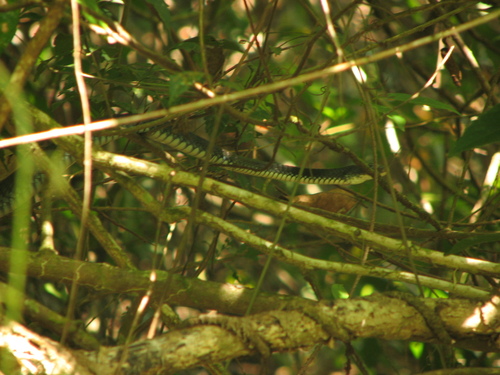
Xenodon rabdocephalus, commonly known as the false fer-de-lance, is a species of mildly venomous rear-fanged snake in the family Colubridae. The species is native to Central America and northern South America. There are two recognized subspecies.
X. rabdocephalus is found in southern Mexico in the states of Guerrero, Veracruz, Yucatan and Campeche, through Guatemala, Belize, Honduras, El Salvador, Costa Rica and Panama. In northern South America it is found in Colombia, Venezuela, Guyana, Suriname, French Guiana, Ecuador, Peru, Bolivia and Brazil where it occurs in the states of Amapá, Rondônia, Pará, Espírito Santo and Bahia.
The preferred natural habitat of X. rabdocephalus is forest in the moist lowlands and the premontane regions, at altitudes from sea level to 1,500 m (4,900 ft). X. rabdocephalus is a medium-sized snake which reaches a total length (including tail) of 80 cm (31 in). It is mainly brown with a series of brown and grey hourglass-shaped dorsal blotches on the body.
X. rabdocephalus feeds mainly on frogs and toads, including tadpoles. X. rabdocephalus is oviparous. Wikipedia →
Recent sightings of False Fer-de-lance in Bastimentos Island National Marine Park
LIVEiNaturalistClosest Relatives at Bastimentos Island National Marine Park
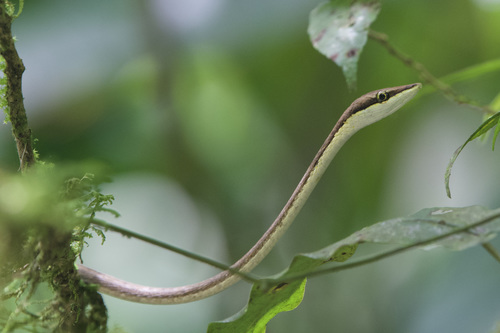
 Striped Vine Snake
Oxybelis vittatus

 Blunthead Tree Snake
Imantodes cenchoa

Puffing Snake
Phrynonax poecilonotus

Chicken Snake
Spilotes pullatus

 Adorned Graceful Brown Snake
Rhadinaea decorata
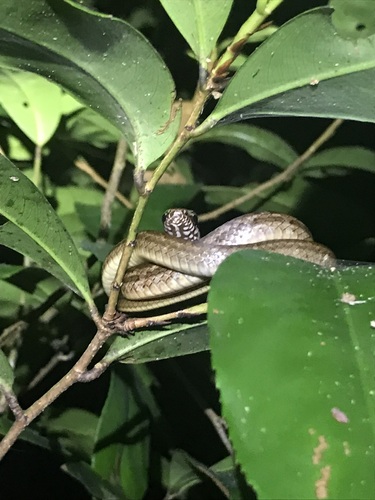
Central American Lizard Eater
Mastigodryas alternatus
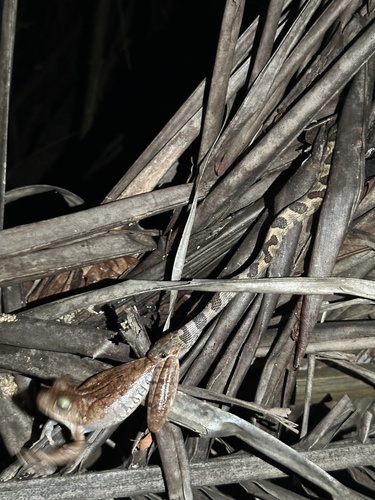
 Ornate Cat-eyed Snake
Leptodeira ornata

Cope's Parrot Snake
Leptophis depressirostris
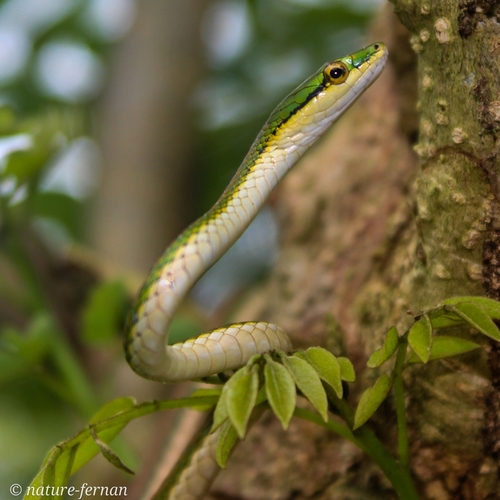
Oliver's Parrot Snake
Leptophis nebulosus

Common Mussurana
Clelia clelia

Cloudy Snail-eating Snake
Sibon nebulatus
Werner's Sipo
Chironius flavopictus
Global Distribution
Warmer areas are where this animal is recorded most often.
Parks Where Found
| # | Park | Country | Daily sighting probability |
|---|---|---|---|
| 1 | Braulio Carrillo National Park | 🇨🇷 Costa Rica | |
| 2 | Arenal Volcano National Park | 🇨🇷 Costa Rica | |
| 3 | Amboró National Park | 🇧🇴 Bolivia | |
| 4 | Lago de Yojoa | 🇭🇳 Honduras | |
| 5 | Chagres National Park | 🇵🇦 Panama | |
| 6 | Pico Bonito National Park | 🇭🇳 Honduras | |
| 7 | Tikal National Park | 🇬🇹 Guatemala | |
| 8 | Amacayacu National Natural Park | 🇨🇴 Colombia | |
| 9 | Cerro Azul Meámbar National Park | 🇭🇳 Honduras | |
| 10 | Yasuní National Park | 🇪🇨 Ecuador | |
| 11 | Cordillera Azul National Park | 🇵🇪 Peru | |
| 12 | Montes Azules Biosphere Reserve | 🇲🇽 Mexico | |
| 13 | Bastimentos Island National Marine Park | 🇵🇦 Panama | |
| 14 | Cuyabeno Wildlife Reserve | 🇪🇨 Ecuador | |
| 15 | Tambopata National Reserve | 🇵🇪 Peru | |
| 16 | Carara National Park | 🇨🇷 Costa Rica | |
| 17 | Calakmul Biosphere Reserve | 🇲🇽 Mexico | |
| 18 | Tapantí-Macizo de la Muerte National Park | 🇨🇷 Costa Rica | |
| 19 | La Amistad International Park (Panama) | 🇵🇦 Panama | |
| 20 | Monteverde Cloud Forest Reserve | 🇨🇷 Costa Rica |