

Tussock Skink
Pseudemoia pagenstecheri
Silhouette: Oliver Griffith · PhyloPic
- KingdomAnimalia (Animals)
- PhylumChordata (Chordates)
- ClassSquamata
- FamilyScincidae (Skinks)
- GenusPseudemoia (Pseudemoia Grass Skinks)
- SpeciesPseudemoia pagenstecheri (Tussock Skink)
About the Tussock Skink
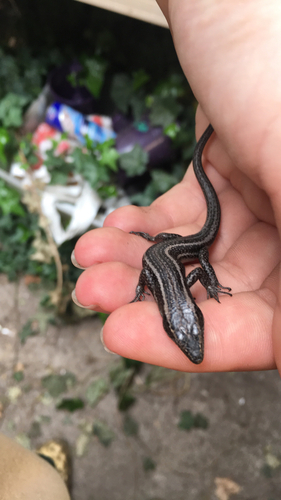
Pseudemoia pagenstecheri, also known commonly as the southern grass tussock skink and the southern tussock grass skink, is a species of lizard in the subfamily Eugongylinae of the family Scincidae. The species is endemic to Australia.
The specific name, pagenstecheri, is in honour of German zoologist Heinrich Alexander Pagenstecher. Pseudemoia pagenstecheri is found in eastern New South Wales, Tasmania, and northeastern Victoria, Australia. The preferred natural habitat of Pseudemoia pagenstecheri is tussock grassland, especially medium to tall tussock grass.
Pseudemoia pagenstecheri is viviparous. Pseudemoia pagenstecheri is known to hybridize with two other species in its genus, P. cryodroma and P. entrecasteauxii. The southern grass tussock skink is listed as "Least Concern" on the IUCN Red List of Threatened species. However, it is acknowledged that the current population is decreasing, especially in the Western Volcanic Plains of Melbourne. This is further confirmed by the Flora and Fauna Guarantee Act listing the species as "Endangered" in the Volcanic Plains... Wikipedia →
Recent sightings of Tussock Skink in Blue Mountains National Park
LIVEiNaturalistClosest Relatives at Blue Mountains National Park

 Entrecasteaux's Skink
Pseudemoia entrecasteauxii
Trunk-climbing Cool-skink
Pseudemoia spenceri

 Eastern Water Skink
Eulamprus quoyii

Southern Water Skink
Eulamprus heatwolei

Blotched Bluetongue
Tiliqua nigrolutea

 Cunningham's Skink
Egernia cunninghami

Common Bluetongue
Tiliqua scincoides

Southern Weasel Skink
Saproscincus mustelinus

Copper-tailed Ctenotus
Ctenotus taeniolatus

 Pale-flecked Garden Sunskink
Lampropholis guichenoti

Black Crevice-skink
Egernia saxatilis

 Pink-Tongued Lizard
Cyclodomorphus gerrardii
Global Distribution
Warmer areas are where this animal is recorded most often.
Parks Where Found
| # | Park | Country | Daily sighting probability |
|---|---|---|---|
| 1 | Kosciuszko National Park | 🇦🇺 Australia | |
| 2 | Blue Mountains National Park | 🇦🇺 Australia | |
| 3 | Grampians National Park | 🇦🇺 Australia |
Quick answers
What are the chances of seeing a Tussock Skink in Blue Mountains National Park?
About 10% of wildlife watchers report a Tussock Skink sighting in Blue Mountains National Park, based on 8 verified sightings from GBIF citizen-science data.
When is the best time to see Tussock Skink in Blue Mountains National Park?
October has the highest sighting rate for Tussock Skink in Blue Mountains National Park in our monthly data.