



Black-billed Weaver
Ploceus melanogaster
Silhouette: Sheatherius · PhyloPic
- KingdomAnimalia (Animals)
- PhylumChordata (Chordates)
- ClassAves (Birds)
- OrderPasseriformes (Perching Birds)
- FamilyPloceidae (Weavers and Allies)
- GenusPloceus (Typical Weavers)
- SpeciesPloceus melanogaster (Black-billed Weaver)
About the Black-billed Weaver
The black-billed weaver (Ploceus melanogaster) is a species of bird in the family Ploceidae. It has multiple isolated elevated populations across sub-Saharan Africa : the Western High Plateau, the Albertine Rift montane forests and the East African montane forests.
Black-billed weaver – Species text in Weaver Watch. Wikipedia →
Recent sightings of Black-billed Weaver in Bwindi Impenetrable National Park
LIVEiNaturalistClosest Relatives at Bwindi Impenetrable National Park

 Brown-capped Weaver
Ploceus insignis

Baglafecht Weaver
Ploceus baglafecht

Black-necked Weaver
Ploceus nigricollis

Strange Weaver
Ploceus alienus

Vieillot's Weaver
Ploceus nigerrimus
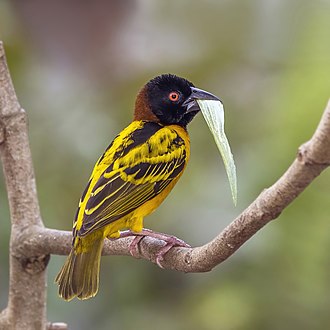
Village Weaver
Ploceus cucullatus

Holub's Golden-Weaver
Ploceus xanthops

Black-headed Weaver
Ploceus melanocephalus

Spectacled Weaver
Ploceus ocularis

 Compact Weaver
Ploceus superciliosus

Northern Brown-throated Weaver
Ploceus castanops

Slender-billed Weaver
Ploceus pelzelni
Global Distribution
Warmer areas are where this animal is recorded most often.
Parks Where Found
| # | Park | Country | Daily sighting probability |
|---|---|---|---|
| 1 | Bwindi Impenetrable National Park | 🇺🇬 Uganda | |
| 2 | Nyungwe National Park | 🇷🇼 Rwanda | |
| 3 | Virunga National Park | 🇨🇩 Democratic Republic of the Congo | |
| 4 | Kibale National Park | 🇺🇬 Uganda | |
| 5 | Akagera National Park | 🇷🇼 Rwanda | |
| 6 | Lake Mburo National Park | 🇺🇬 Uganda | |
| 7 | Queen Elizabeth National Park | 🇺🇬 Uganda | |
| 8 | Masai Mara National Reserve | 🇰🇪 Kenya |
Quick answers
What are the chances of seeing a Black-billed Weaver in Bwindi Impenetrable National Park?
About 20% of wildlife watchers report a Black-billed Weaver sighting in Bwindi Impenetrable National Park, based on 452 verified sightings from GBIF citizen-science data.
When is the best time to see Black-billed Weaver in Bwindi Impenetrable National Park?
May has the highest sighting rate for Black-billed Weaver in Bwindi Impenetrable National Park in our monthly data.