


Rwenzori Batis
Batis diops
Silhouette: Mathieu Pélissié · PhyloPic
- KingdomAnimalia (Animals)
- PhylumChordata (Chordates)
- ClassAves (Birds)
- OrderPasseriformes (Perching Birds)
- FamilyPlatysteiridae (Wattle-eyes and Batises)
- GenusBatis (turtleweeds)
- SpeciesBatis diops (Rwenzori Batis)
About the Rwenzori Batis
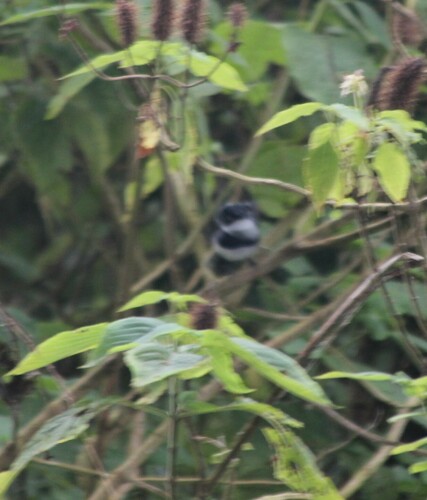
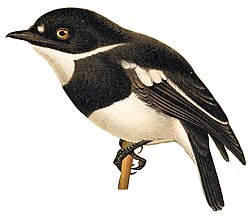
The Rwenzori batis (Batis diops) is a bird native to the Albertine Rift montane forests, where it inhabits altitudes of 1,340–3,300 m (4,400–10,830 ft). The Rwenzori batis is a small, active black and white Old World flycatcher. The upperparts are dark bluish black with a white stripe along the wing and a white loral spot. The underparts are mostly white except for a glossy bluish black breast band, a black chin spot and black thighs and grey axillaries. The tail is black with the feathers having white tips and white edges on the outer tail feathers. The sexes are similar except that males have yellow eyes and females have been reported sometimes to have orangey-red eyes. Juveniles are similar to adults but the plumage has a more rufous cast. The Rwenzori batis measures 11–12 cm (4.3–4.7 in) in length, and it weighs 8–15.5 g (0.28–0.55 oz).
The territorial call is a slow low-pitched whistle, which has been described as both ventriloqual and eerie. It is repeated with an interval of 2–4 seconds between each whistle. The Rwenzori batis occurs in the Albertine Rift from the Rwenzori Mountains in the north to Mount Kabobo in the... Wikipedia →
Recent sightings of Rwenzori Batis in Bwindi Impenetrable National Park
LIVEiNaturalistClosest Relatives at Bwindi Impenetrable National Park

 Chinspot Batis
Batis molitor

Western Black-headed Batis
Batis erlangeri

 Brown-throated Wattle-eye
Platysteira cyanea

Black-and-white Shrike-flycatcher
Bias musicus
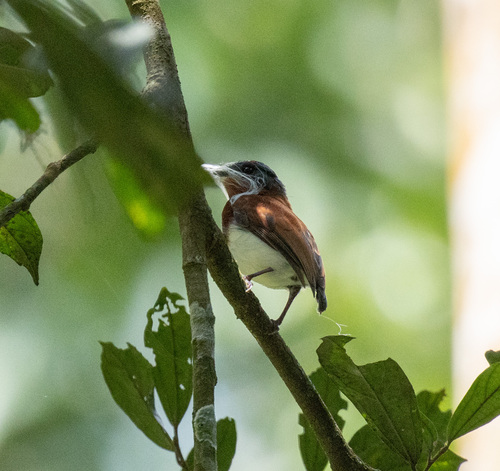
Chestnut Wattle-eye
Dyaphorophyia castanea

African Shrike-flycatcher
Megabyas flammulatus

Black-throated Wattle-eye
Platysteira peltata

Jameson's Wattle-eye
Platysteira jamesoni

Northern Double-collared Sunbird
Cinnyris reichenowi

 Common Bulbul
Pycnonotus barbatus

Black Sawwing
Psalidoprocne pristoptera

 Green White-eye
Zosterops stuhlmanni
Global Distribution
Warmer areas are where this animal is recorded most often.
Parks Where Found
| # | Park | Country | Daily sighting probability |
|---|---|---|---|
| 1 | Nyungwe National Park | 🇷🇼 Rwanda | |
| 2 | Bwindi Impenetrable National Park | 🇺🇬 Uganda | |
| 3 | Volcanoes National Park | 🇷🇼 Rwanda | |
| 4 | Virunga National Park | 🇨🇩 Democratic Republic of the Congo | |
| 5 | Queen Elizabeth National Park | 🇺🇬 Uganda | |
| 6 | Kibale National Park | 🇺🇬 Uganda |
Quick answers
What are the chances of seeing a Rwenzori Batis in Bwindi Impenetrable National Park?
About 20% of wildlife watchers report a Rwenzori Batis sighting in Bwindi Impenetrable National Park, based on 425 verified sightings from GBIF citizen-science data.
When is the best time to see Rwenzori Batis in Bwindi Impenetrable National Park?
May has the highest sighting rate for Rwenzori Batis in Bwindi Impenetrable National Park in our monthly data.