


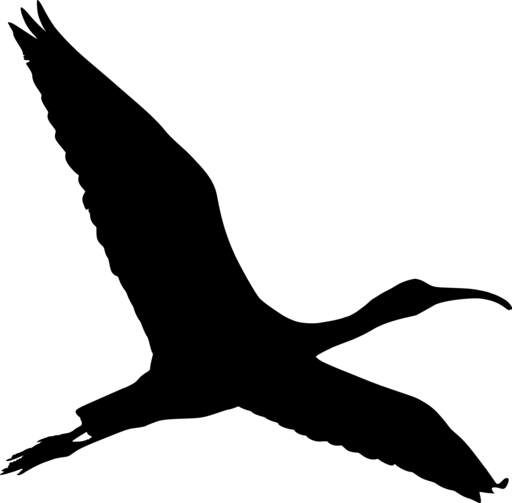
Puna Ibis
Plegadis ridgwayi
Silhouette: Mathieu Pélissié · PhyloPic
- KingdomAnimalia (Animals)
- PhylumChordata (Chordates)
- ClassAves (Birds)
- OrderPelecaniformes (Pelicans, Herons, Ibises, and Allies)
- FamilyThreskiornithidae (Ibises and Spoonbills)
- GenusPlegadis (Plegadis Ibises)
- SpeciesPlegadis ridgwayi (Puna Ibis)
About the Puna Ibis
The puna ibis (Plegadis ridgwayi) is a species of waterbird in the family Threskiornithidae, spoonbills and ibises. It can be found in Ecuador, Argentina, Bolivia, Chile, and Peru. It can be found in the altiplano and puna regions of the Andean highlands, inhabiting wetlands such as swamps, marshes and lakes, at an elevation of 3,000 to 4,500 metres (9,840 to 14,760 ft). They migrate down to sea level to forage in coastal wetlands as well.
The puna ibis is a medium-sized waterbird, weighing 478–608 g (16.9–21.4 oz) and about 56–61 cm (22–24 in) tall. They can be identified by their dark purple-brown bodies, long neck, and red downward-curved bill. Their plumage has iridescence to it, offering a purple or green sheen. While there is little sexual dimorphism between male and females, a breeding adult can be recognized by its dark chestnut head and neck, with a red face and, and nonbreeding or immature individuals have white streaks on their head and neck, with a duller face. Males are also larger than females.
This species lives in wetlands such as marshes, lagoons, and shallow lakes across the high Andes. This species mainly feeds on invertebrates, but may also snack... Wikipedia →
Recent sightings of Puna Ibis in Cordillera Azul National Park
LIVEiNaturalistClosest Relatives at Cordillera Azul National Park

 Green Ibis
Mesembrinibis cayennensis

 Roseate Spoonbill
Platalea ajaja

 Cattle Egret
Bubulcus ibis

 Great Egret
Ardea alba

 Striated Heron
Butorides striata

 Snowy Egret
Egretta thula

 Black-crowned Night Heron
Nycticorax nycticorax

Cocoi Heron
Ardea cocoi

Little Blue Heron
Egretta caerulea

 Rufescent Tiger Heron
Tigrisoma lineatum

 Capped Heron
Pilherodius pileatus

Fasciated Tiger Heron
Tigrisoma fasciatum
Global Distribution
Warmer areas are where this animal is recorded most often.
Parks Where Found
| # | Park | Country | Daily sighting probability |
|---|---|---|---|
| 1 | Lauca National Park | 🇨🇱 Chile | |
| 2 | Huascarán National Park | 🇵🇪 Peru | |
| 3 | Manu National Park | 🇵🇪 Peru | |
| 4 | Paracas National Reserve | 🇵🇪 Peru | |
| 5 | Madidi National Park | 🇧🇴 Bolivia | |
| 6 | Cordillera Azul National Park | 🇵🇪 Peru | |
| 7 | Amboró National Park | 🇧🇴 Bolivia | |
| 8 | Cajas National Park | 🇪🇨 Ecuador | |
| 9 | Tambopata National Reserve | 🇵🇪 Peru |
Quick answers
What are the chances of seeing a Puna Ibis in Cordillera Azul National Park?
Under 5% of wildlife watchers report a Puna Ibis sighting in Cordillera Azul National Park, based on 34 verified sightings from GBIF citizen-science data.
When is the best time to see Puna Ibis in Cordillera Azul National Park?
March has the highest sighting rate for Puna Ibis in Cordillera Azul National Park in our monthly data.