
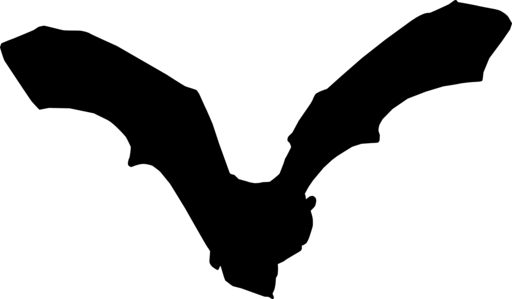
Great Evening Bat
Ia io
Silhouette: Margot Michaud · PhyloPic
- KingdomAnimalia (Animals)
- PhylumChordata (Chordates)
- ClassMammalia (Mammals)
- OrderChiroptera (Bats)
- FamilyVespertilionidae (Evening Bats)
- GenusIa
- SpeciesIa io (Great Evening Bat)
About the Great Evening Bat
The great evening bat (Ia io) is the largest bat in the vesper bat family (Vespertilionidae) and the only living species in the genus Ia. It is common to Eastern and Southeastern Asia (China, India, Laos, Nepal, Thailand and Vietnam), mainly living in areas with limestone caves at altitudes of 400–1,700 m (1,300–5,600 ft). Their roost sites have been found both near the cave entrances and up to 1.5 km (0.93 mi) within the cave systems.
The great evening bat reaches a length of 90–105 mm (3.5–4.1 in). It is colored brown on top and grayish underneath. Average wingspan is 51 cm (20 in) and it typically weighs 58 g (2.0 oz). Not much is known about its habits and behavior. The bat usually lives in small groups. Its food consists of insects during the summer, as with most vesper bats. The great evening bat also sometimes feeds on small birds during the Autumn once insects become scarcer. The bat leaves its sleeping place in the late afternoon in search of food. During the winter months it may migrate to warmer regions.
The great evening bat's constant shifting diet makes it a suitable host for viruses. Due to the switch from insects during the summer to birds during autumn... Wikipedia →
Recent sightings of Great Evening Bat in Cuc Phuong National Park
LIVEiNaturalistClosest Relatives at Cuc Phuong National Park

 Exotic Leaf-nosed Bat
Hipposideros gentilis

intermediate roundleaf bat
Hipposideros larvatus

 Greater Long-tongued Fruit Bat
Macroglossus sobrinus

Great Roundleaf Bat
Hipposideros armiger

Lesser false vampire bat
Megaderma spasma
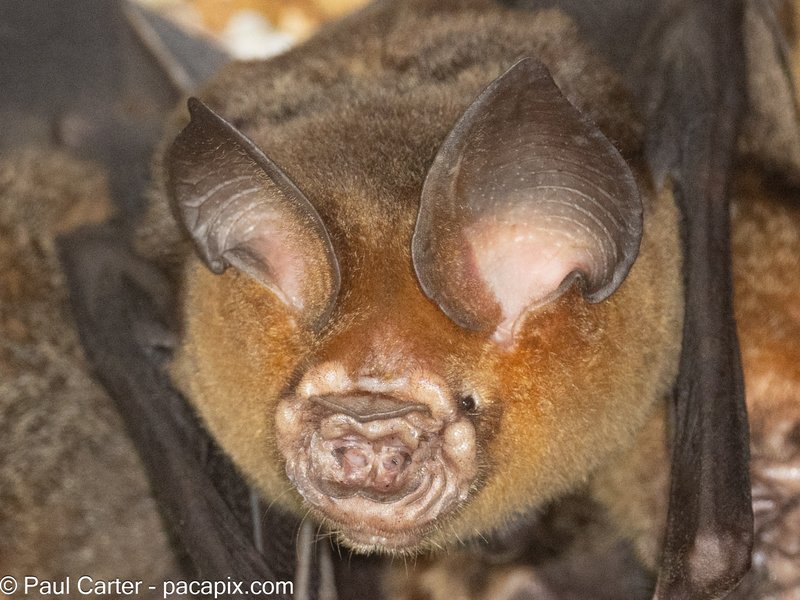
Ha Long Roundleaf Bat
Hipposideros alongensis

Stoliczka's Trident Bat
Aselliscus stoliczkanus

 Greater Short-nosed Fruit Bat
Cynopterus sphinx

 Pearson's Horseshoe Bat
Rhinolophus pearsonii
Global Distribution
Warmer areas are where this animal is recorded most often.
Parks Where Found
| # | Park | Country | Daily sighting probability |
|---|---|---|---|
| 1 | Cuc Phuong National Park | 🇻🇳 Vietnam |
More parks will be added in future updates.