
Northern Beardless-Tyrannulet
Camptostoma imberbe
- KingdomAnimalia (Animals)
- PhylumChordata (Cordats)
- ClassAves (Aus)
- OrderPasseriformes
- FamilyTyrannidae (Tirànids)
- GenusCamptostoma (Beardless-Tyrannulets)
- SpeciesCamptostoma imberbe (Northern Beardless-Tyrannulet)
Closest Relatives at Cumbres de Monterrey National Park

Great Kiskadee
Pitangus sulphuratus

Dusky-capped Flycatcher
Myiarchus tuberculifer

Black Phoebe
Sayornis nigricans

Couch's Kingbird
Tyrannus couchii

Tropical Kingbird
Tyrannus melancholicus
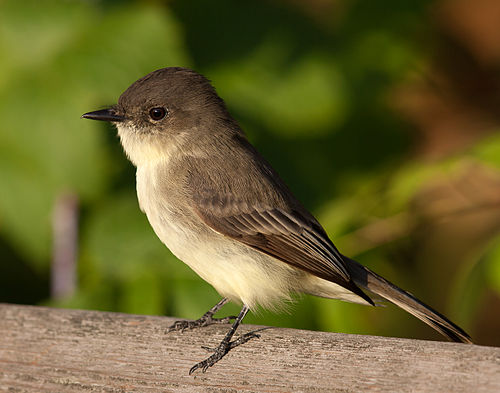
Eastern Phoebe
Sayornis phoebe

Sulphur-bellied Flycatcher
Myiodynastes luteiventris

Say's Phoebe
Sayornis saya

Pacific-slope Flycatcher
Empidonax difficilis

Vermilion Flycatcher
Pyrocephalus rubinus

Greater Pewee
Contopus pertinax

Cassin's Kingbird
Tyrannus vociferans
📅 Monthly Probability
☀️ When They're Spotted
Most active during daytime hours (6am–6pm) · across all parks (global)
Global Distribution
Where this species is recorded worldwide. Restricted to human observations from 2019 onwards — the same kind of record and the same period the probabilities on this page are built from, so collar-tracking studies, camera-trap arrays and museum specimens are excluded. Around Santa Rosa that removes 5,924 GPS fixes from a handful of tagged jaguars.
where this species is recorded (GBIF density — it tracks where observers go, not how likely a sighting is) · parks where it occurs — tap a pin for the sighting probability there
Parks Where Found
| # | Park | Country | Probability |
|---|---|---|---|
| 1 | Calakmul Biosphere Reserve | 🇲🇽 Mexico | |
| 2 | Celestún Biosphere Reserve | 🇲🇽 Mexico | |
| 3 | Santa Rosa National Park | 🇨🇷 Costa Rica | |
| 4 | Arrecifes de Cozumel National Park | 🇲🇽 Mexico | |
| 5 | Rincón de la Vieja National Park | 🇨🇷 Costa Rica | |
| 6 | Cañón del Sumidero National Park | 🇲🇽 Mexico | |
| 7 | Ría Lagartos Biosphere Reserve | 🇲🇽 Mexico | |
| 8 | Cumbres de Monterrey National Park | 🇲🇽 Mexico | |
| 9 | Las Baulas Marine National Park | 🇨🇷 Costa Rica | |
| 10 | Ostional Wildlife Refuge | 🇨🇷 Costa Rica | |
| 11 | Sian Ka'an Biosphere Reserve | 🇲🇽 Mexico | |
| 12 | Lago de Yojoa | 🇭🇳 Honduras | |
| 13 | Cabo Blanco Absolute Nature Reserve | 🇨🇷 Costa Rica | |
| 14 | Cerro Azul Meámbar National Park | 🇭🇳 Honduras | |
| 15 | Carara National Park | 🇨🇷 Costa Rica | |
| 16 | Palo Verde National Park | 🇨🇷 Costa Rica | |
| 17 | Cockscomb Basin Wildlife Sanctuary | 🇧🇿 Belize | |
| 18 | Pico Bonito National Park | 🇭🇳 Honduras | |
| 19 | Tenorio Volcano National Park | 🇨🇷 Costa Rica | |
| 20 | Masaya Volcano National Park | 🇳🇮 Nicaragua | |
| 21 | Montes Azules Biosphere Reserve | 🇲🇽 Mexico | |
| 22 | Arenal Volcano National Park | 🇨🇷 Costa Rica |
Quick answers
What are the chances of seeing a Northern Beardless-Tyrannulet in Cumbres de Monterrey National Park?
About 6% of visitor-days record a Northern Beardless-Tyrannulet sighting in Cumbres de Monterrey National Park, based on 152 observer-days of citizen-science data from GBIF.
When is the best time to see Northern Beardless-Tyrannulet in Cumbres de Monterrey National Park?
June has the highest sighting rate for Northern Beardless-Tyrannulet in Cumbres de Monterrey National Park in our monthly data.