


Chestnut-fronted Macaw
Ara severus
Silhouette: Myriam_Ramirez · PhyloPic
- KingdomAnimalia (Animals)
- PhylumChordata (Chordates)
- ClassAves (Birds)
- OrderPsittaciformes (Parrots)
- FamilyPsittacidae (New World and African Parrots)
- GenusAra
- SpeciesAra severus (Chestnut-fronted Macaw)
About the Chestnut-fronted Macaw
The chestnut-fronted macaw or severe macaw (Ara severus) is one of the largest of the mini-macaws. It reaches a size of around 45 cm (18 in) of which around half is the length of the tail. They can be found over a large part of Northern South America from Panama south into Amazonian Brazil and central Bolivia. A feral population is found in Florida.
Their lifespan is listed as anything from 30 to 80 years of age. The chestnut-fronted macaw was formally described in 1758 by the Swedish naturalist Carl Linnaeus in the tenth edition of his Systema Naturae. He placed it with all the other parrots in the genus Psittacus and coined the binomial name Psittacus severus. This macaw is now one of the eight extant species placed the genus Ara that was erected in 1799 by the French naturalist Bernard Germain de Lacépède. The genus name is from ará meaning "macaw" in the Tupi language of Brazil. The word is an onomatopoeia based on the sound of their call. The specific epithet severus is Latin meaning "grim", "cruel" or "stern". The species is considered to be monotypic: no subspecies are recognised.
The chestnut-fronted or severe macaw is mostly green in colour... Wikipedia →
Recent sightings of Chestnut-fronted Macaw in Everglades National Park
LIVEiNaturalistClosest Relatives at Everglades National Park

 Blue-and-yellow Macaw
Ara ararauna

 Monk Parakeet
Myiopsitta monachus

 Rose-ringed Parakeet
Psittacula krameri

 Yellow-chevroned Parakeet
Brotogeris chiriri

 Mitred Parakeet
Aratinga mitrata

 Budgerigar
Melopsittacus undulatus

Red-masked Parakeet
Aratinga erythrogenys

 Cockatiel
Nymphicus hollandicus
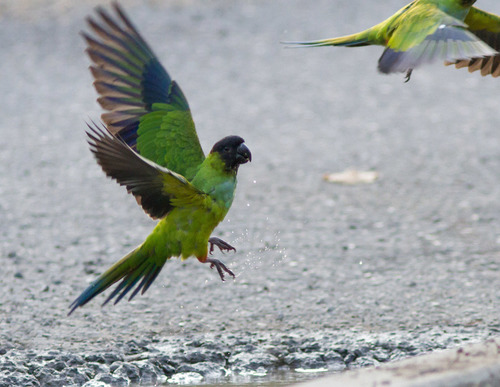
 Nanday Parakeet
Nandayus nenday

blue-crowned conure
Aratinga acuticaudata

White-winged Parakeet
Brotogeris versicolurus

Orange-winged Parrot
Amazona amazonica
Global Distribution
Warmer areas are where this animal is recorded most often.
Parks Where Found
| # | Park | Country | Daily sighting probability |
|---|---|---|---|
| 1 | Tambopata National Reserve | 🇵🇪 Peru | |
| 2 | Cuyabeno Wildlife Reserve | 🇪🇨 Ecuador | |
| 3 | Manu National Park | 🇵🇪 Peru | |
| 4 | Sierra de la Macarena National Park | 🇨🇴 Colombia | |
| 5 | Yasuní National Park | 🇪🇨 Ecuador | |
| 6 | Amacayacu National Natural Park | 🇨🇴 Colombia | |
| 7 | Madidi National Park | 🇧🇴 Bolivia | |
| 8 | Darién National Park | 🇵🇦 Panama | |
| 9 | Henri Pittier National Park | 🇻🇪 Venezuela | |
| 10 | Amboró National Park | 🇧🇴 Bolivia | |
| 11 | Noel Kempff Mercado National Park | 🇧🇴 Bolivia | |
| 12 | Canaima National Park | 🇻🇪 Venezuela | |
| 13 | Cordillera Azul National Park | 🇵🇪 Peru | |
| 14 | Farallones de Cali National Natural Park | 🇨🇴 Colombia | |
| 15 | Chingaza National Natural Park | 🇨🇴 Colombia | |
| 16 | Parque Estadual Encontro das Águas | 🇧🇷 Brazil | |
| 17 | Anavilhanas National Park | 🇧🇷 Brazil | |
| 18 | Tayrona National Natural Park | 🇨🇴 Colombia | |
| 19 | Everglades National Park | 🇺🇸 United States |