


Blue-and-yellow Macaw
Ara ararauna
Silhouette: Edwin Price · PhyloPic
- KingdomAnimalia (Animals)
- PhylumChordata (Chordates)
- ClassAves (Birds)
- OrderPsittaciformes (Parrots)
- FamilyPsittacidae (New World and African Parrots)
- GenusAra
- SpeciesAra ararauna (Blue-and-yellow Macaw)
About the Blue-and-yellow Macaw
The blue-and-yellow macaw (Ara ararauna), also known as the blue-and-gold macaw, is a large Neotropical parrot with a mostly blue dorsum, light yellow/orange venter, and gradient hues of green on top of its head. It is a member of the large group of neotropical parrots known as macaws. It inhabits forest (especially varzea, but also in open sections of terra firme or unflooded forest), woodland, and savannah of tropical Central and South America, as well as the island of Trinidad in the Caribbean. They are popular in aviculture because of their striking color, ability to talk, ready availability in the marketplace, and close bonding to humans. It is the most commonly kept macaw species in captivity worldwide as a pet or companion parrot and is also the cheapest among the large macaws. As of 2025, there are 1 million blue and gold macaws living in captivity worldwide, one of the highest populations of any large parrot in captivity.
The blue-and-yellow macaw was formally described by the Swedish naturalist Carl Linnaeus in 1758 in the tenth edition of his Systema Naturae. He placed it with all the other parrots in the genus Psittacus and coined the binomial name Psittacus... Wikipedia →
Recent sightings of Blue-and-yellow Macaw in Everglades National Park
LIVEiNaturalistClosest Relatives at Everglades National Park

 Chestnut-fronted Macaw
Ara severus

 Monk Parakeet
Myiopsitta monachus

 Rose-ringed Parakeet
Psittacula krameri

 Yellow-chevroned Parakeet
Brotogeris chiriri

 Mitred Parakeet
Aratinga mitrata

 Budgerigar
Melopsittacus undulatus

Red-masked Parakeet
Aratinga erythrogenys

 Cockatiel
Nymphicus hollandicus
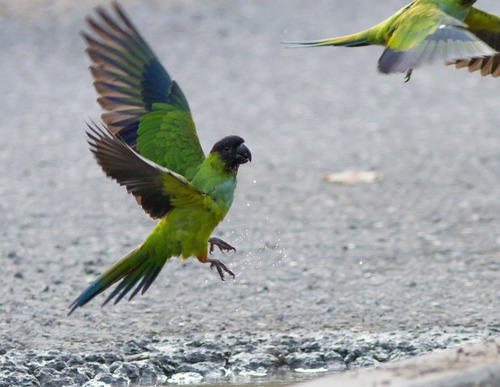
 Nanday Parakeet
Nandayus nenday

blue-crowned conure
Aratinga acuticaudata

White-winged Parakeet
Brotogeris versicolurus

Orange-winged Parrot
Amazona amazonica
Global Distribution
Warmer areas are where this animal is recorded most often.
Parks Where Found
Quick answers
What are the chances of seeing a Blue-and-yellow Macaw in Everglades National Park?
Under 5% of wildlife watchers report a Blue-and-yellow Macaw sighting in Everglades National Park, based on 37 verified sightings from GBIF citizen-science data.
When is the best time to see Blue-and-yellow Macaw in Everglades National Park?
August has the highest sighting rate for Blue-and-yellow Macaw in Everglades National Park in our monthly data.