

Yellow-bellied Poison Frog
Andinobates fulguritus
Silhouette: Steven Traver · PhyloPic
- KingdomAnimalia (Animals)
- PhylumChordata (Chordates)
- ClassAmphibia (Amphibians)
- OrderAnura (Frogs and Toads)
- FamilyDendrobatidae (Poison Dart Frogs)
- GenusAndinobates
- SpeciesAndinobates fulguritus (Yellow-bellied Poison Frog)
About the Yellow-bellied Poison Frog
The yellow-bellied poison frog, yellow-bellied poison-arrow frog, or yellowbelly poison frog (Andinobates fulguritus) is a species of frog in the family Dendrobatidae. It is found in northwestern Colombia (Chocó Department and the westernmost Antioquia and Risaralda) and east-central Panama.
Males measure 13.5–15 mm (0.53–0.59 in) and females 14–16.5 mm (0.55–0.65 in) in snout–vent length. The dorsum is black with gold, yellow, or yellow-green dorso-lateral and lateral stripes (only the former are complete). On the anterior part of the dorsum there is an incomplete median stripe. The venter is gold or yellow and has black marbling or spots. The skin is slightly granular on the dorsum and moderately granular on the venter. The tympanum is round and has its postero-dorsal part concealed. The iris is black. Both fingers and toes lack fringes and webbing.
The frog's Latin name, fulguritus, means "struck by lightning." The male frog identifies a suitable egg deposition site and leads the female frog to it. He deposits his sperm first and she lays her eggs on top of it. The eggs are deposited in leaf-litter. The male frog returns to the... Wikipedia →
Recent sightings of Yellow-bellied Poison Frog in Farallones de Cali National Natural Park
LIVEiNaturalistClosest Relatives at Farallones de Cali National Natural Park

 Cauca Poison Frog
Andinobates bombetes

Lehmann's Frog
Oophaga lehmanni

 Boettger's Colombian Tree Frog
Dendropsophus columbianus

 Giant Marine Toad
Rhinella horribilis

 Johnstone's Whistling Frog
Eleutherodactylus johnstonei

Palmer's Robber Frog
Pristimantis palmeri
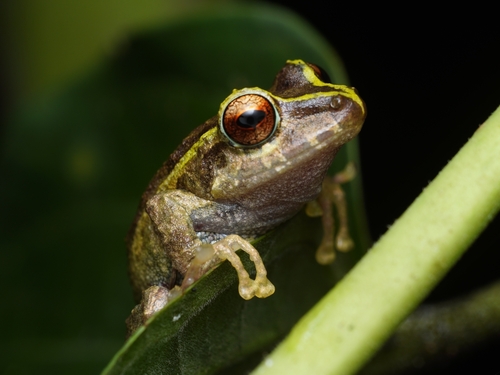
Colombian Robber Frog
Pristimantis erythropleura
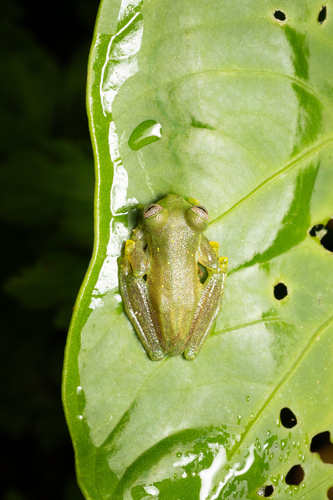
Pijaos' Glassfrog
Nymphargus pijao

Cachabi Robber Frog
Pristimantis achatinus
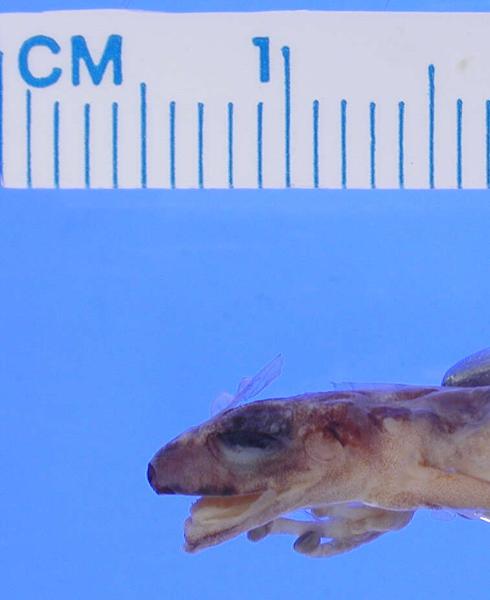
Cali Robber Frog
Pristimantis brevifrons
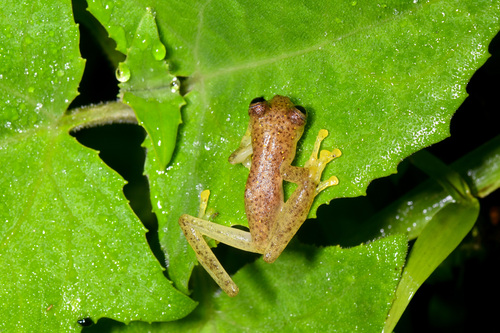
Lynch's Cochran Frog
Nymphargus ignotus
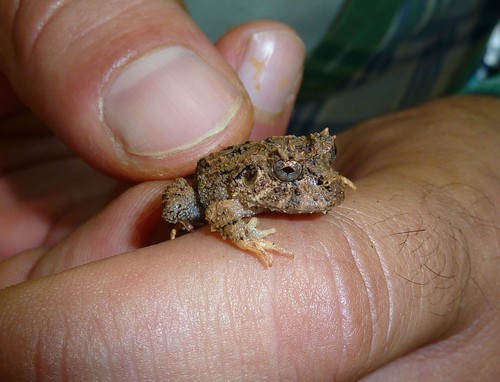
 Ruiz's Robber Frog
Strabomantis ruizi
Global Distribution
Warmer areas are where this animal is recorded most often.
Parks Where Found
| # | Park | Country | Daily sighting probability |
|---|---|---|---|
| 1 | Utría National Natural Park | 🇨🇴 Colombia | |
| 2 | Chagres National Park | 🇵🇦 Panama | |
| 3 | Farallones de Cali National Natural Park | 🇨🇴 Colombia |