

Desert Hamster
Phodopus roborovskii
Silhouette: T. Michael Keesey · PhyloPic
- KingdomAnimalia (Animals)
- PhylumChordata (Chordates)
- ClassMammalia (Mammals)
- OrderRodentia (Rodents)
- FamilyCricetidae (Hamsters, Voles, Lemmings, and Allies)
- GenusPhodopus (Small Desert Hamsters)
- SpeciesPhodopus roborovskii (Desert Hamster)
About the Desert Hamster
The Roborovski hamster (Phodopus roborovskii), also known as the desert hamster, Robo dwarf hamster or simply dwarf hamster is the smallest of three species of hamster in the genus Phodopus, and is native to the deserts of Central Asia. They average 1.6 cm (0.6 in) in length at birth and grow to be 6.3 cm (2.5 in) in length and 16 g (0.56 oz) in weight in adulthood. Distinguishing characteristics of the Roborovskis are eyebrow-like white spots and the lack of any dorsal stripe (found on the other members of the genus Phodopus). The average lifespan for the Roborovski hamster is 2–4 years, though this is dependent on living conditions (extremes being four years in captivity and two in the wild). Roborovskis are known for their speed and have been said to run up to 6 miles a night. The common name and scientific name honor the Russian explorer Vsevolod Ivanovich Roborovsky, who collected the holotype of this species.
Roborovski hamsters are found in desert regions, such as the basin of the lake Zaysan in Kazakhstan and regions of Tuva, Mongolia and Xinjiang in China. The hamsters inhabit areas of loose sand and sparse vegetation and are rarely found in areas... Wikipedia →
Recent sightings of Desert Hamster in Gobi Gurvansaikhan National Park
LIVEiNaturalistClosest Relatives at Gobi Gurvansaikhan National Park

 Mongolian Hamster
Allocricetulus curtatus

 Mongolian Jird
Meriones unguiculatus

 Alashan Ground Squirrel
Spermophilus alashanicus

 Siberian Jerboa
Allactaga sibirica

 Hairy-footed Jerboa
Dipus sagitta

 Tarbagan Marmot
Marmota sibirica

 Mid-day Jird
Meriones meridianus

Great Gerbil
Rhombomys opimus

Pallid Ground Squirrel
Spermophilus pallidicauda
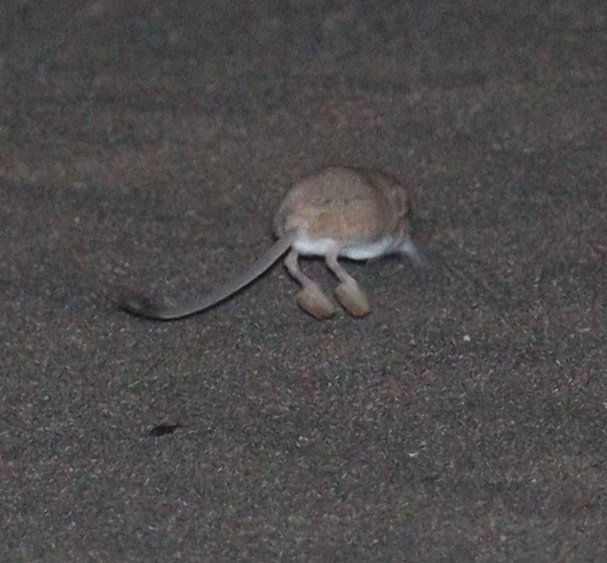
Andrews's Three-toed Jerboa
Stylodipus andrewsi

Thick-tailed Pygmy Jerboa
Salpingotus crassicauda
Global Distribution
Warmer areas are where this animal is recorded most often.
Parks Where Found
| # | Park | Country | Daily sighting probability |
|---|---|---|---|
| 1 | Gobi Gurvansaikhan National Park | 🇲🇳 Mongolia |
More parks will be added in future updates.