


Mongolian Jird
Meriones unguiculatus
Silhouette: Daniel Stadtmauer · PhyloPic
- KingdomAnimalia (Animals)
- PhylumChordata (Chordates)
- ClassMammalia (Mammals)
- OrderRodentia (Rodents)
- FamilyMuridae (Old World Mice and Rats)
- GenusMeriones (Jirds)
- SpeciesMeriones unguiculatus (Mongolian Jird)
About the Mongolian Jird
The Mongolian gerbil, also referred to as the Mongolian jird (Meriones unguiculatus), is a rodent belonging to the subfamily Gerbillinae. Their body size is typically 110–135 mm (4+1⁄4–5+1⁄4 in), with a 95–120 mm (3+3⁄4–4+3⁄4 in) tail, and body weight 60–130 g (2–4+1⁄2 oz), with adult males larger than females. The animal is used in science for research or kept as a small house pet. Their use in science dates back to the later half of the 19th century, but they only started to be kept as pets in the English-speaking world after 1954, when they were brought to the United States. However, their use in scientific research has fallen out of favor.
The first known mention of gerbils came in 1866, by Father Armand David, who sent "yellow rats" to the French National Museum of Natural History in Paris, from northern China. They were named Gerbillus unguiculatus by the scientist Alphonse Milne-Edwards in 1867.
There is a popular misconception about the meaning of this scientific name, appearing both in printed works and in websites, due to the genus Meriones sharing the name with Greek warrior Meriones in Homer's Iliad; however, translations like "clawed warrior... Wikipedia →
Recent sightings of Mongolian Jird in Gobi Gurvansaikhan National Park
LIVEiNaturalistClosest Relatives at Gobi Gurvansaikhan National Park

 Mid-day Jird
Meriones meridianus

 Great Gerbil
Rhombomys opimus

 Alashan Ground Squirrel
Spermophilus alashanicus

 Siberian Jerboa
Allactaga sibirica

Desert Hamster
Phodopus roborovskii

 Hairy-footed Jerboa
Dipus sagitta

 Tarbagan Marmot
Marmota sibirica

Pallid Ground Squirrel
Spermophilus pallidicauda

Mongolian Hamster
Allocricetulus curtatus
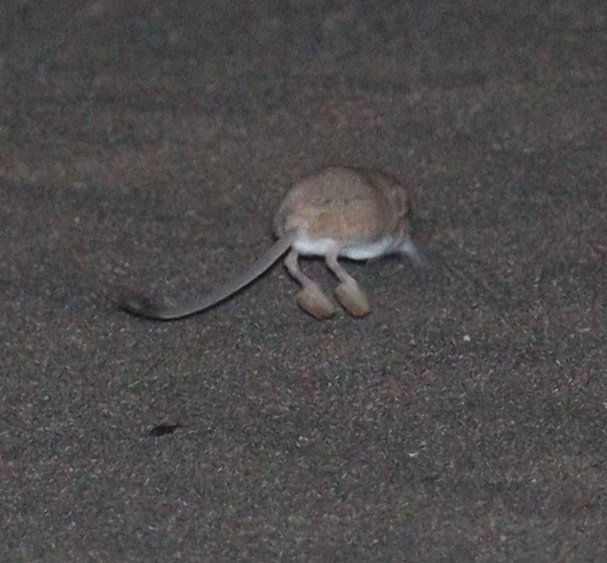
Andrews's Three-toed Jerboa
Stylodipus andrewsi

Thick-tailed Pygmy Jerboa
Salpingotus crassicauda
Global Distribution
Warmer areas are where this animal is recorded most often.
Parks Where Found
| # | Park | Country | Daily sighting probability |
|---|---|---|---|
| 1 | Gobi Gurvansaikhan National Park | 🇲🇳 Mongolia |
More parks will be added in future updates.
Quick answers
What are the chances of seeing a Mongolian Jird in Gobi Gurvansaikhan National Park?
About 50% of wildlife watchers report a Mongolian Jird sighting in Gobi Gurvansaikhan National Park, based on 39 verified sightings from GBIF citizen-science data.
When is the best time to see Mongolian Jird in Gobi Gurvansaikhan National Park?
October has the highest sighting rate for Mongolian Jird in Gobi Gurvansaikhan National Park in our monthly data.