
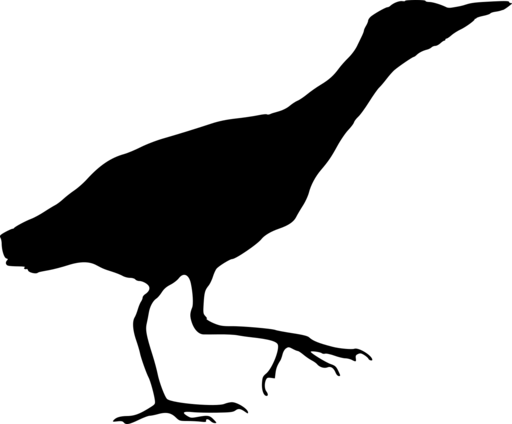
White-necked Heron
Ardea pacifica
Silhouette: Giles Laurent · PhyloPic
- KingdomAnimalia (Animals)
- PhylumChordata (Chordates)
- ClassAves (Birds)
- OrderPelecaniformes (Pelicans, Herons, Ibises, and Allies)
- FamilyArdeidae (Herons, Egrets, and Bitterns)
- GenusArdea (Great Herons and Egrets)
- SpeciesArdea pacifica (White-necked Heron)
About the White-necked Heron
The white-necked heron or Pacific heron (Ardea pacifica) is a species of heron that is found on most of the Australian continent wherever freshwater habitats exist. It is also found in parts of Indonesia and New Guinea, but is uncommon in Tasmania. The populations of this species in Australia are known to be nomadic like most water birds in Australia, moving from one water source to another, often entering habitats they have not previously occupied, taking advantage of flooding and heavy rain where the surplus of food allows them to breed and raise their young. Irruptive movements may occur when environmental conditions are right in places where the species has been rare or absent.
The white-necked heron was formally described in 1801 by the English ornithologist John Latham under the current binomial name Ardea pacifica. Latham specified the locality as New South Wales. The species is monotypic: no subspecies are recognised.
The white-necked heron is a large, diurnal, long-legged waterbird. It is mostly slate-grey to black with distinctive black spots in the centre of the lower fore-neck and throat. During the breeding season plum-coloured nuptial plumes... Wikipedia →
Recent sightings of White-necked Heron in Grampians National Park
LIVEiNaturalistClosest Relatives at Grampians National Park

 Great Egret
Ardea alba

 White-faced Heron
Egretta novaehollandiae

 Nankeen Night-Heron
Nycticorax caledonicus

 Australasian Bittern
Botaurus poiciloptilus

intermediate egret
Egretta intermedia

 Australian White Ibis
Threskiornis molucca

 Straw-necked Ibis
Threskiornis spinicollis

 Yellow-billed Spoonbill
Platalea flavipes

 Australian Pelican
Pelecanus conspicillatus

Royal Spoonbill
Platalea regia

 Glossy Ibis
Plegadis falcinellus
Global Distribution
Warmer areas are where this animal is recorded most often.
Parks Where Found
| # | Park | Country | Daily sighting probability |
|---|---|---|---|
| 1 | Kakadu National Park | 🇦🇺 Australia | |
| 2 | Grampians National Park | 🇦🇺 Australia | |
| 3 | Litchfield National Park | 🇦🇺 Australia | |
| 4 | Great Otway National Park | 🇦🇺 Australia | |
| 5 | Uluru-Kata Tjuta National Park | 🇦🇺 Australia | |
| 6 | Daintree National Park | 🇦🇺 Australia | |
| 7 | Nitmiluk National Park | 🇦🇺 Australia | |
| 8 | Kosciuszko National Park | 🇦🇺 Australia | |
| 9 | Lamington National Park | 🇦🇺 Australia | |
| 10 | Ningaloo Marine Park | 🇦🇺 Australia | |
| 11 | Blue Mountains National Park | 🇦🇺 Australia | |
| 12 | Wilsons Promontory National Park | 🇦🇺 Australia | |
| 13 | Royal National Park | 🇦🇺 Australia | |
| 14 | Cape Range | 🇦🇺 Australia | |
| 15 | Springbrook National Park | 🇦🇺 Australia | |
| 16 | Flinders Ranges National Park | 🇦🇺 Australia | |
| 17 | Flinders Chase | 🇦🇺 Australia | |
| 18 | Noosa National Park | 🇦🇺 Australia | |
| 19 | Booderee National Park | 🇦🇺 Australia |
Quick answers
What are the chances of seeing a White-necked Heron in Grampians National Park?
About 10% of wildlife watchers report a White-necked Heron sighting in Grampians National Park, based on 122 verified sightings from GBIF citizen-science data.
When is the best time to see White-necked Heron in Grampians National Park?
December has the highest sighting rate for White-necked Heron in Grampians National Park in our monthly data.