
Gliding gecko
Gekko kuhli
- KingdomAnimalia (Animals)
- PhylumChordata (Chordates)
- ClassSquamata
- FamilyGekkonidae (Typical Geckos)
- GenusGekko (Calling Geckos)
- SpeciesGekko kuhli (Gliding gecko)
About the Gliding gecko
Gekko kuhli, commonly known as Kuhl's flying gecko, Kuhl's parachute gecko, or the gliding gecko, is a species of lizard in the family Gekkonidae. The species is found in Southeast Asia. The specific name, kuhli, is in honor of German zoologist Heinrich Kuhl.
G. kuhli has adaptations to its skin, including flaps on either side of its body, webbed feet, and a flattened tail to allow it to glide over short distances. This gecko has a remarkable camouflage. The flaps of skin along its sides help it blend with tree bark. Often, its eyes are the only way to distinguish it from its surroundings. This use of camouflage by G. kuhli has caused need for some other adaptions to protect it from the increased UV exposure. Despite being nocturnal, it is considered heliothermic because of the extended sun exposure it receives while resting during the day. This increased UV exposure has led to the adaption of pigmented internal organs to protect the lizard's more important organs from UV damage.
Kuhl's flying gecko, like many other gecko species, has evolved intricate toe pads with microscopic hairs that can adhere to nearly any surface, including glass. ��2�... Wikipedia →
Closest Relatives at Gunung Leuser National Park

Spotted House Gecko
Gekko monarchus

Large Forest Gecko
Gekko smithii

Flat-tailed House Gecko
Hemidactylus platyurus

Common House Gecko
Hemidactylus frenatus

Four-striped Forest Gecko
Cyrtodactylus quadrivirgatus

Mutilating Gecko
Gehyra mutilata

Marbled Bow-fingered Gecko
Cyrtodactylus marmoratus
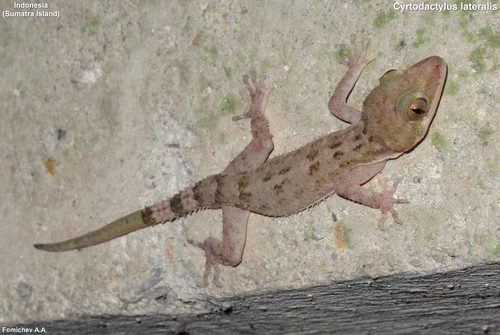
Spiny Forest Gecko
Cyrtodactylus lateralis
Brooks' Wolf Gecko
Luperosaurus brooksii
Global Distribution
Where this species is recorded worldwide. Restricted to human observations from 2019 onwards — the same kind of record and the same period the probabilities on this page are built from, so collar-tracking studies, camera-trap arrays and museum specimens are excluded. Around Santa Rosa that removes 5,924 GPS fixes from a handful of tagged jaguars.
where this species is recorded (GBIF density — it tracks where observers go, not how likely a sighting is) · parks where it occurs — tap a pin for the sighting probability there
Parks Where Found
| # | Park | Country | Daily sighting probability |
|---|---|---|---|
| 1 | Gunung Leuser National Park | 🇮🇩 Indonesia | |
| 2 | Kinabalu Park | 🇲🇾 Malaysia | |
| 3 | Danum Valley Conservation Area | 🇲🇾 Malaysia | |
| 4 | Khao Luang National Park | 🇹🇭 Thailand | |
| 5 | Kinabatangan Wildlife Sanctuary | 🇲🇾 Malaysia | |
| 6 | Sepilok | 🇲🇾 Malaysia |
Quick answers
What are the chances of seeing a Gliding gecko in Gunung Leuser National Park?
About 10% of wildlife watchers report a Gliding gecko sighting in Gunung Leuser National Park, based on 7 verified sightings from GBIF citizen-science data.
When is the best time to see Gliding gecko in Gunung Leuser National Park?
February has the highest sighting rate for Gliding gecko in Gunung Leuser National Park in our monthly data.