



Yellow-eyed Babbler
Chrysomma sinense
Silhouette: Sheatherius · PhyloPic
- KingdomAnimalia (Animals)
- PhylumChordata (Chordates)
- ClassAves (Birds)
- OrderPasseriformes (Perching Birds)
- FamilySylviidae (Sylviid Warblers and Allies)
- GenusChrysomma (Yellow-eyed Babblers and Allies)
- SpeciesChrysomma sinense (Yellow-eyed Babbler)
About the Yellow-eyed Babbler
The yellow-eyed babbler (Chrysomma sinense) is a passerine bird native to South and Southeast Asia. It inhabits shrubland, grassland and wetland habitats. On the IUCN Red List, it is listed as Least Concern because of its wide distribution and stable population.
Its common name refers to the traditional placement in the Old World babbler family Timaliidae although the genus Chrysomma forms a clade along with the parrotbills within the family Paradoxornithidae. The yellow-eyed babbler was formally described in 1789 by the German naturalist Johann Friedrich Gmelin in his revised and expanded edition of Carl Linnaeus's Systema Naturae. He placed it with the tits and manakins in the genus Parus and coined the binomial name Parus sinensis. Gmelin based his account on the "Chinese titmouse" that had been described in 1783 by the English ornithologist John Latham in his book A General Synopsis of Birds. Gmelin gave the type locality as China but it is now restricted to the province of Guangdong. The yellow-eyed babbler is now placed together with Jerdon's babbler in the genus Chrysomma that was introduced in 1843 by the English zoologist Edward Blyth.
Three subspecies are recognised... Wikipedia →
Recent sightings of Yellow-eyed Babbler in Horton Plains National Park
LIVEiNaturalistClosest Relatives at Horton Plains National Park

 Sri Lanka White-eye
Zosterops ceylonensis

 Pied Bushchat
Saxicola caprata

 Yellow-eared Bulbul
Pycnonotus penicillatus

 Hill Swallow
Hirundo domicola

 Dull-blue Flycatcher
Eumyias sordidus

 Large-billed Crow
Corvus macrorhynchos

 Cinereous Tit
Parus cinereus
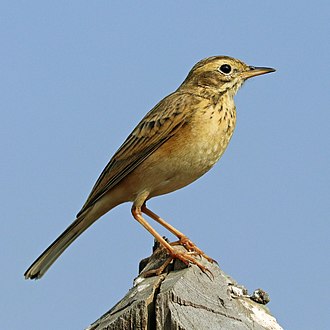
 Oriental Pipit
Anthus rufulus

 Indian Blackbird
Turdus simillimus

 Zitting Cisticola
Cisticola juncidis

Sri Lanka Bush-Warbler
Elaphrornis palliseri

 Grey Wagtail
Motacilla cinerea
Global Distribution
Warmer areas are where this animal is recorded most often.
Parks Where Found
| # | Park | Country | Daily sighting probability |
|---|---|---|---|
| 1 | Keoladeo National Park | 🇮🇳 India | |
| 2 | Mudumalai National Park | 🇮🇳 India | |
| 3 | Minneriya National Park | 🇱🇰 Sri Lanka | |
| 4 | Ranthambore National Park | 🇮🇳 India | |
| 5 | Jim Corbett National Park | 🇮🇳 India | |
| 6 | Royal Bardia National Park | 🇳🇵 Nepal | |
| 7 | Yala National Park | 🇱🇰 Sri Lanka | |
| 8 | Manas National Park | 🇮🇳 India | |
| 9 | Chitwan National Park | 🇳🇵 Nepal | |
| 10 | Bandhavgarh National Park | 🇮🇳 India | |
| 11 | Satpura National Park | 🇮🇳 India | |
| 12 | Kanha National Park | 🇮🇳 India | |
| 13 | Nagarhole National Park | 🇮🇳 India | |
| 14 | Wilpattu National Park | 🇱🇰 Sri Lanka | |
| 15 | Bandipur National Park | 🇮🇳 India | |
| 16 | Kaziranga National Park | 🇮🇳 India | |
| 17 | Royal Manas National Park | 🇧🇹 Bhutan | |
| 18 | Sinharaja Forest Reserve | 🇱🇰 Sri Lanka | |
| 19 | Kaeng Krachan National Park | 🇹🇭 Thailand | |
| 20 | Horton Plains National Park | 🇱🇰 Sri Lanka | |
| 21 | Khao Yai National Park | 🇹🇭 Thailand | |
| 22 | Cat Tien National Park | 🇻🇳 Vietnam |