



Olive Dasia
Dasia olivacea
Silhouette: David Orr · PhyloPic
- KingdomAnimalia (Animals)
- PhylumChordata (Chordates)
- ClassSquamata
- FamilyScincidae (Skinks)
- GenusDasia (Dasia Skinks)
- SpeciesDasia olivacea (Olive Dasia)
About the Olive Dasia
Dasia olivacea, the olive dasia or olive tree skink, is a semi-arboreal species of skink lizard native to Southeast Asia. Dasia olivacea is found south of approximately 15° north in Southeast Asia, including parts of Laos, Malaysia, Myanmar, Thailand, Singapore, Vietnam, throughout the island of Borneo (Sarawak, Kalimantan, Brunei), the Indonesian islands of Bali, Java and Sumatra (among others), as well as India's Andaman and Nicobar Islands.
The species is originally known from a single locality in Cambodia. The northernmost extreme for D. olivacea is possibly the Sakaerat Environmental Research Station in the Nakhon Ratchasima Province of eastern Thailand. Dasia olivacea lives almost exclusively in trees, only rarely descending to nest or to move between trees. Eggs may be laid more than once per year, in clutches of up to 14 eggs; incubation lasts 69 days. Because it is very widespread and ecologically flexible, D. olivacea is considered to be a species of Least Concern on the IUCN Red List.
Dasia olivacea was first described by John Edward Gray, in a publication of the Annals of Natural History (1839), as the type... Wikipedia →
Recent sightings of Olive Dasia in Kaeng Krachan National Park
LIVEiNaturalistClosest Relatives at Kaeng Krachan National Park

 Spotted Forest Skink
Sphenomorphus maculatus

 Many-lined Sun-skink
Eutropis multifasciata

Allapalli Grass Skink
Eutropis macularia
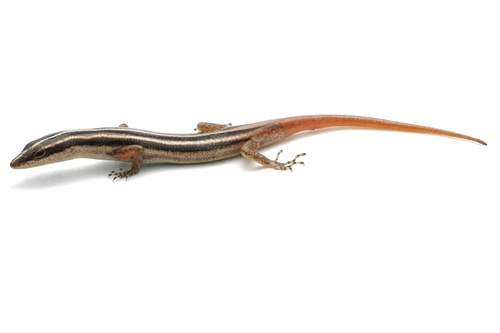
 Banded Lipinia
Lipinia microcerca

Bowring’s Supple Skink
Subdoluseps bowringii

Banded Lipinia
Lipinia vittigera

Longtail Mabuya
Eutropis longicaudata

Nakhon Si-Thammarat forest Skink
Sphenomorphus tersus
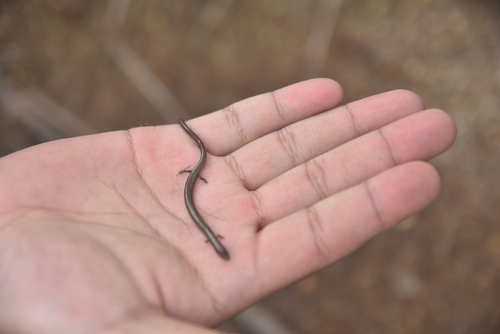
Siamese Supple Skink
Lygosoma siamense

Prachuap Snake Skink
Isopachys anguinoides

Indian Forest Skink
Sphenomorphus indicus

Bipedal Burrowing Skink
Jarujinia bipedalis
Global Distribution
Warmer areas are where this animal is recorded most often.
Parks Where Found
| # | Park | Country | Daily sighting probability |
|---|---|---|---|
| 1 | Khao Sok National Park | 🇹🇭 Thailand | |
| 2 | Kaeng Krachan National Park | 🇹🇭 Thailand | |
| 3 | Gunung Leuser National Park | 🇮🇩 Indonesia | |
| 4 | Cat Tien National Park | 🇻🇳 Vietnam | |
| 5 | Khao Yai National Park | 🇹🇭 Thailand | |
| 6 | Bako National Park | 🇲🇾 Malaysia | |
| 7 | Kerinci Seblat National Park | 🇮🇩 Indonesia | |
| 8 | Taman Negara National Park | 🇲🇾 Malaysia | |
| 9 | Sepilok | 🇲🇾 Malaysia |
Quick answers
What are the chances of seeing a Olive Dasia in Kaeng Krachan National Park?
About 10% of wildlife watchers report a Olive Dasia sighting in Kaeng Krachan National Park, based on 22 verified sightings from GBIF citizen-science data.
When is the best time to see Olive Dasia in Kaeng Krachan National Park?
June has the highest sighting rate for Olive Dasia in Kaeng Krachan National Park in our monthly data.