

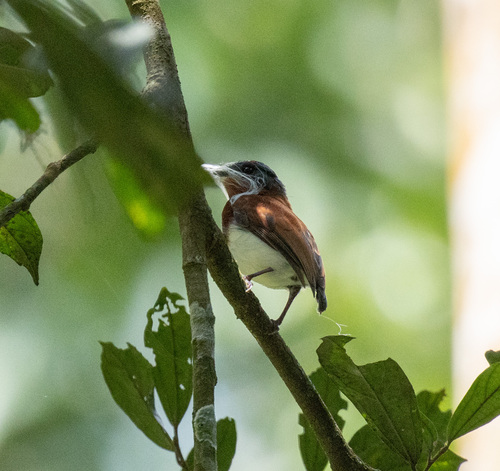
African Shrike-flycatcher
Megabyas flammulatus
Silhouette: Sheatherius · PhyloPic
- KingdomAnimalia (Animals)
- PhylumChordata (Chordates)
- ClassAves (Birds)
- OrderPasseriformes (Perching Birds)
- FamilyPlatysteiridae (Wattle-eyes and Batises)
- GenusMegabyas
- SpeciesMegabyas flammulatus (African Shrike-flycatcher)
About the African Shrike-flycatcher
The African shrike-flycatcher or red-eyed shrike-flycatcher (Megabyas flammulatus) is a species of bird in the vanga family Vangidae. It is the only species in the monotypic genus Megabyas. The African shrike-flycatcher was described by the French naturalists Jules Verreaux and Édouard Verreaux in 1855, who placed it in its own genus, Megabyas. Over the years, the species was sometimes lumped with the closely related black-and-white shrike-flycatcher in the genus Bias, another widespread African species similar in size, plumage and skull shape. The genus name is derived from the Ancient Greek word mega for large and Bias for the genus it was evidently related to.
The African shrike-flycatcher was once lumped with many other families of birds in Muscicapidae, the Old World flycatchers. Within that enlarged family, it was placed with the monarch-flycatchers until 1970 when it was identified as closer to the wattle-eye and batises in the present day family Platysteiridae. A 2004 analysis of the genetics of the species along with other members of the family showed that it, along with the genus Bias, were actually embedded in the Vangidae, a family previously thought to be... Wikipedia →
Recent sightings of African Shrike-flycatcher in Kibale National Park
LIVEiNaturalistClosest Relatives at Kibale National Park

 Black-and-white Shrike-flycatcher
Bias musicus

Brown-throated Wattle-eye
Platysteira cyanea
Chestnut Wattle-eye
Dyaphorophyia castanea

Jameson's Wattle-eye
Platysteira jamesoni

 Chinspot Batis
Batis molitor

Black-throated Wattle-eye
Platysteira peltata
Rwenzori Batis
Batis diops

 Common Bulbul
Pycnonotus barbatus

Olive-bellied Sunbird
Cinnyris chloropygius

 Little Greenbul
Eurillas virens

 Bronze Mannikin
Lonchura cucullata

Green-backed Camaroptera
Camaroptera brachyura
Global Distribution
Warmer areas are where this animal is recorded most often.
Parks Where Found
| # | Park | Country | Daily sighting probability |
|---|---|---|---|
| 1 | Kibale National Park | 🇺🇬 Uganda | |
| 2 | Bwindi Impenetrable National Park | 🇺🇬 Uganda | |
| 3 | Virunga National Park | 🇨🇩 Democratic Republic of the Congo | |
| 4 | Semuliki National Park | 🇺🇬 Uganda | |
| 5 | Queen Elizabeth National Park | 🇺🇬 Uganda | |
| 6 | Murchison Falls National Park | 🇺🇬 Uganda |
Quick answers
What are the chances of seeing a African Shrike-flycatcher in Kibale National Park?
About 10% of wildlife watchers report a African Shrike-flycatcher sighting in Kibale National Park, based on 286 verified sightings from GBIF citizen-science data.
When is the best time to see African Shrike-flycatcher in Kibale National Park?
August has the highest sighting rate for African Shrike-flycatcher in Kibale National Park in our monthly data.