



Orange-cheeked Waxbill
Estrilda melpoda
Silhouette: Ferran Sayol · PhyloPic
- KingdomAnimalia (Animals)
- PhylumChordata (Chordates)
- ClassAves (Birds)
- OrderPasseriformes (Perching Birds)
- FamilyEstrildidae (Waxbills and Allies)
- GenusEstrilda (Typical Waxbills)
- SpeciesEstrilda melpoda (Orange-cheeked Waxbill)
About the Orange-cheeked Waxbill
The orange-cheeked waxbill (Estrilda melpoda) is a common species of estrildid finch native to western and central Africa, with an estimated global extent of occurrence of 3,600,000 km2. The orange-cheeked waxbill lives in small family parties or flocks of thirty of more individuals. Their high-pitched peeps are the best clue of their presence. Like most estridids, they are very acrobatic in their movements on twigs and grass stems, "climbing" up and down verticals and hanging upside down while feeding. Males usually have brighter orange patches on the abdomen.
They feed on tiny grass seeds, which they collect from the ground or, more often, directly from grass panicles. They hang on the stems and harvest the ripe or green seeds, sometimes while hanging upside down. Small insects such as termites, aphids, and gnats are taken during the breeding season.
This species prefers to nest close to or directly on the ground in tangled clumps of tall grass. They will collect the surrounding grass stems together, especially old seed heads (panicles), helping to camouflage the structure. Fine white feathers line the interior where three to six tiny white... Wikipedia →
Recent sightings of Orange-cheeked Waxbill in Kibale National Park
LIVEiNaturalistClosest Relatives at Kibale National Park

 Black-crowned Waxbill
Estrilda nonnula

Fawn-breasted Waxbill
Estrilda paludicola

Crimson-rumped Waxbill
Estrilda rhodopyga

Kandt's Waxbill
Estrilda kandti

 Bronze Mannikin
Lonchura cucullata

 Gray-headed Negrofinch
Nigrita canicapillus

White-breasted Negrofinch
Nigrita fusconotus

Black-and-white Mannikin
Lonchura bicolor

Red-headed Bluebill
Spermophaga ruficapilla

Red-billed Firefinch
Lagonosticta senegala
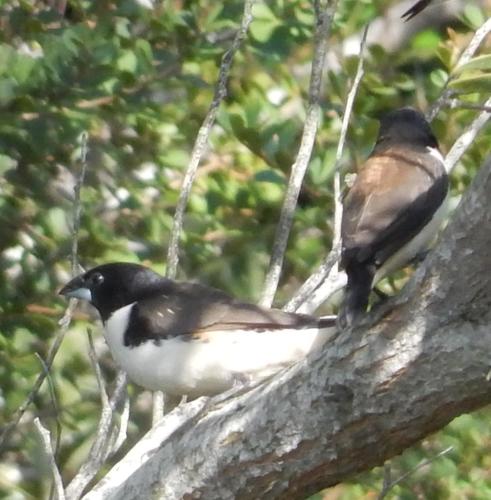
Magpie Mannikin
Lonchura fringilloides

Bar-breasted Firefinch
Lagonosticta rufopicta
Global Distribution
Warmer areas are where this animal is recorded most often.
Parks Where Found
| # | Park | Country | Daily sighting probability |
|---|---|---|---|
| 1 | Semuliki National Park | 🇺🇬 Uganda | |
| 2 | Niokolo-Koba National Park | 🇸🇳 Senegal | |
| 3 | Kibale National Park | 🇺🇬 Uganda | |
| 4 | Murchison Falls National Park | 🇺🇬 Uganda |