

Fawn-breasted Waxbill
Estrilda paludicola
Silhouette: Ferran Sayol · PhyloPic
- KingdomAnimalia (Animals)
- PhylumChordata (Chordates)
- ClassAves (Birds)
- OrderPasseriformes (Perching Birds)
- FamilyEstrildidae (Waxbills and Allies)
- GenusEstrilda (Typical Waxbills)
- SpeciesEstrilda paludicola (Fawn-breasted Waxbill)
About the Fawn-breasted Waxbill
The fawn-breasted waxbill (Estrilda paludicola) is a common species of estrildid finch found in central Africa. It has an estimated global extent of occurrence of 1,800,000 km2. Estrilda paludicola, E. ochrogaster and E. poliopareia have been lumped into E. paludicola (Dowsett and Forbes-Watson 1993).
The fawn-breasted waxbill was formally described in 1863 by the German explorer and ornithologist Theodor von Heuglin from a specimen collected on the middle course of the Bahr el Ghazal River in South Sudan. He placed the species in the genus Estrilda (which he spelled as Estrelda) and coined the binomial name Estrilda paludicola. The specific epithet paludicola is Latin meaning "marsh-dweller" (from palus, paludis meaning "swamp" and -cola meaning "dweller").
Six subspecies are recognised: E. p. paludicola Heuglin, 1863 – east Central African Republic and north DR Congo to west Kenya E. p. roseicrissa Reichenow, 1892 – east DR Congo and southwest Uganda to northwest Tanzania E. p. marwitzi Reichenow, 1900 – central south Tanzania
E. p. benguellensis Neumann, 1908 – Angola, south DR Congo and Zambia E. p. ruthae Chapin, 1950 – central DR Congo E. p. ochrogaster Salvadori... Wikipedia →
Recent sightings of Fawn-breasted Waxbill in Kibale National Park
LIVEiNaturalistClosest Relatives at Kibale National Park

 Black-crowned Waxbill
Estrilda nonnula

Crimson-rumped Waxbill
Estrilda rhodopyga

Orange-cheeked Waxbill
Estrilda melpoda

Kandt's Waxbill
Estrilda kandti

 Bronze Mannikin
Lonchura cucullata

 Gray-headed Negrofinch
Nigrita canicapillus

White-breasted Negrofinch
Nigrita fusconotus

Black-and-white Mannikin
Lonchura bicolor

Red-headed Bluebill
Spermophaga ruficapilla

Red-billed Firefinch
Lagonosticta senegala
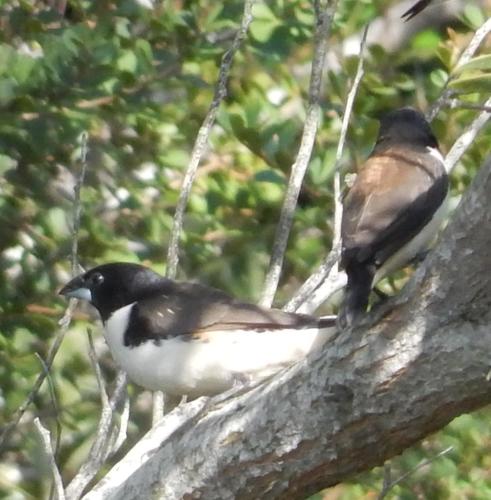
Magpie Mannikin
Lonchura fringilloides

Bar-breasted Firefinch
Lagonosticta rufopicta
Global Distribution
Warmer areas are where this animal is recorded most often.
Parks Where Found
| # | Park | Country | Daily sighting probability |
|---|---|---|---|
| 1 | Nyungwe National Park | 🇷🇼 Rwanda | |
| 2 | Akagera National Park | 🇷🇼 Rwanda | |
| 3 | Kidepo Valley National Park | 🇺🇬 Uganda | |
| 4 | Queen Elizabeth National Park | 🇺🇬 Uganda | |
| 5 | Murchison Falls National Park | 🇺🇬 Uganda | |
| 6 | Semuliki National Park | 🇺🇬 Uganda | |
| 7 | Volcanoes National Park | 🇷🇼 Rwanda | |
| 8 | South Luangwa National Park | 🇿🇲 Zambia | |
| 9 | Virunga National Park | 🇨🇩 Democratic Republic of the Congo | |
| 10 | Lake Mburo National Park | 🇺🇬 Uganda | |
| 11 | Bwindi Impenetrable National Park | 🇺🇬 Uganda | |
| 12 | Kibale National Park | 🇺🇬 Uganda | |
| 13 | Masai Mara National Reserve | 🇰🇪 Kenya | |
| 14 | Ruaha National Park | 🇹🇿 Tanzania | |
| 15 | Bale Mountains National Park | 🇪🇹 Ethiopia | |
| 16 | Serengeti National Park | 🇹🇿 Tanzania |
Quick answers
What are the chances of seeing a Fawn-breasted Waxbill in Kibale National Park?
Under 5% of wildlife watchers report a Fawn-breasted Waxbill sighting in Kibale National Park, based on 15 verified sightings from GBIF citizen-science data.
When is the best time to see Fawn-breasted Waxbill in Kibale National Park?
November has the highest sighting rate for Fawn-breasted Waxbill in Kibale National Park in our monthly data.