


Whitetip Reef Shark
Triaenodon obesus
- KingdomAnimalia (Animals)
- PhylumChordata (Chordates)
- ClassElasmobranchii
- OrderCarcharhiniformes (Ground Sharks)
- FamilyCarcharhinidae (Requiem Sharks)
- GenusTriaenodon
- SpeciesTriaenodon obesus (Whitetip Reef Shark)
About the Whitetip Reef Shark
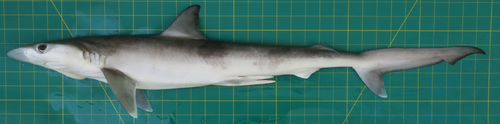
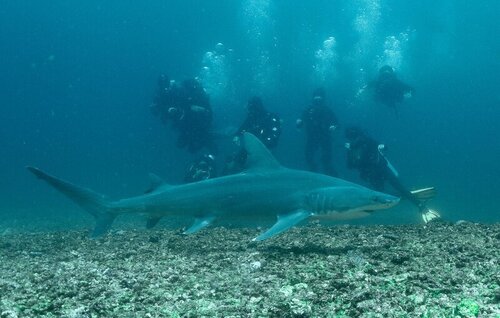
The whitetip reef shark (Triaenodon obesus) is a species of requiem shark, in the family Carcharhinidae. It is the only extant species of genus Triaenodon. A small shark that does not usually exceed 1.6 m (5.2 ft) in length, this species is easily recognizable by its slender body and short but broad head, as well as tubular skin flaps beside the nostrils, oval eyes with vertical pupils, and white-tipped dorsal and caudal fins. One of the most common sharks found on Indo-Pacific coral reefs, the whitetip reef shark occurs as far west as South Africa and as far east as Central America. It is typically found on or near the bottom in clear water, at a depth of 8–40 m (26–131 ft).
During the day, whitetip reef sharks spend much of their time resting inside caves. Unlike other requiem sharks, which rely on ram ventilation and must constantly swim to breathe, this shark can pump water over its gills and lie still on the bottom. At night, whitetip reef sharks emerge to hunt bony fishes, crustaceans, and octopus in groups, their elongate bodies allowing them to force their way into crevices and holes to extract hidden prey. Individuals may stay within a particular area of the reef for months or years, frequently returning to the same shelter. This species is viviparous, in which the developing embryos are sustained by a placental connection to their mother.
Whitetip reef sharks are rarely aggressive towards humans, though they may investigate swimmers closely. However, spear fishers are at risk of being bitten by one attempting to steal their catch. This species is caught for food, though ciguatera poisoning resulting from its consumption has been reported. The IUCN has assessed the whitetip reef shark as Vulnerable, noting its numbers are dwindling due to increasing levels of unregulated fishing activity across its range. The slow reproductive rate and limited habitat preferences of this species renders its populations vulnerable to overfishing. Wikipedia →
Closest Relatives at Komodo National Park



Global Distribution
Where this species is recorded worldwide. Restricted to human observations from 2019 onwards — the same kind of record and the same period the probabilities on this page are built from, so collar-tracking studies, camera-trap arrays and museum specimens are excluded. Around Santa Rosa that removes 5,924 GPS fixes from a handful of tagged jaguars.
where this species is recorded (GBIF density — it tracks where observers go, not how likely a sighting is) · parks where it occurs — tap a pin for the sighting probability there
Parks Where Found
| # | Park | Country | Daily sighting probability |
|---|---|---|---|
| 1 | Coiba National Park | 🇵🇦 Panama | |
| 2 | Isla del Coco National Park | 🇨🇷 Costa Rica | |
| 3 | Galápagos Islands | 🇪🇨 Ecuador | |
| 4 | Ningaloo Marine Park | 🇦🇺 Australia | |
| 5 | Raja Ampat | 🇮🇩 Indonesia | |
| 6 | Cabo Pulmo National Park | 🇲🇽 Mexico |
Quick answers
What are the chances of seeing a Whitetip Reef Shark in Komodo National Park?
About 80% of wildlife watchers report a Whitetip Reef Shark sighting in Komodo National Park, based on 49 verified sightings from GBIF citizen-science data.
When is the best time to see Whitetip Reef Shark in Komodo National Park?
June has the highest sighting rate for Whitetip Reef Shark in Komodo National Park in our monthly data.