
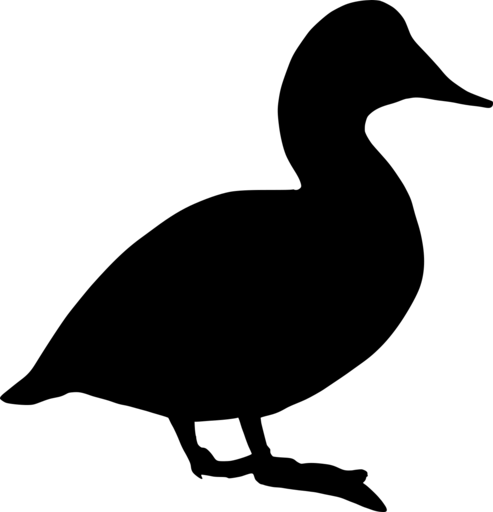
Canvasback
Aythya valisineria
Silhouette: Gabriela Palomo-Munoz · PhyloPic
- KingdomAnimalia (Animals)
- PhylumChordata (Chordates)
- ClassAves (Birds)
- OrderAnseriformes (Waterfowl)
- FamilyAnatidae (Ducks, Geese, and Swans)
- GenusAythya (Scaups, Pochards, and Allies)
- SpeciesAythya valisineria (Canvasback)
About the Canvasback
The canvasback (Aythya valisineria) is a species of diving duck, the largest found in North America. Scottish-American naturalist Alexander Wilson described the canvasback in 1814. The genus name is derived from Greek aithuia, an unidentified seabird mentioned by authors, including Hesychius and Aristotle.
The species name valisineria comes from the wild celery Vallisneria americana, whose winter buds and rhizomes are the canvasback's preferred food during the nonbreeding period. The celery genus is itself named for seventeenth century Italian botanist Antonio Vallisneri.
The duck's common name is based on early European inhabitants of North America's assertion that its back was a canvas-like color. In other languages it is just a white-backed duck; for example in French, morillon à dos blanc, or Spanish, pato lomo blanco. In Mexico it is called pato coacoxtle.
It ranges from 48–56 cm (19–22 in) in length and weighs 862–1,588 g (1.900–3.501 lb), with a wingspan of 79–89 cm (31–35 in). It is the largest species in the genus Aythya, and the largest diving duck in North America. Canvasbacks are similar in size to a mallard but with a heavier and more compact... Wikipedia →
Recent sightings of Canvasback in Pacific Rim National Park Reserve
LIVEiNaturalistClosest Relatives at Pacific Rim National Park Reserve

 Greater Scaup
Aythya marila

 Redhead
Aythya americana

 Ring-necked Duck
Aythya collaris

 Lesser Scaup
Aythya affinis

 Surf Scoter
Melanitta perspicillata

 Common Merganser
Mergus merganser

 Bufflehead
Bucephala albeola

Mallard
Anas platyrhynchos

American White-winged Scoter
Melanitta deglandi

 Taiga Bean Goose
Anser fabalis

Red-breasted Merganser
Mergus serrator

Common Teal
Anas crecca
Global Distribution
Warmer areas are where this animal is recorded most often.
Parks Where Found
| # | Park | Country | Daily sighting probability |
|---|---|---|---|
| 1 | Saguaro National Park | 🇺🇸 United States | |
| 2 | Wrangell-St. Elias National Park | 🇺🇸 United States | |
| 3 | Joshua Tree National Park | 🇺🇸 United States | |
| 4 | Celestún Biosphere Reserve | 🇲🇽 Mexico | |
| 5 | Shenandoah National Park | 🇺🇸 United States | |
| 6 | Point Pelee National Park | 🇨🇦 Canada | |
| 7 | Everglades National Park | 🇺🇸 United States | |
| 8 | Bahía de Loreto National Park | 🇲🇽 Mexico | |
| 9 | Isle Royale National Park | 🇺🇸 United States | |
| 10 | Wood Buffalo National Park | 🇨🇦 Canada | |
| 11 | El Vizcaíno Biosphere Reserve | 🇲🇽 Mexico | |
| 12 | Denali National Park | 🇺🇸 United States |
Quick answers
What are the chances of seeing a Canvasback in Pacific Rim National Park Reserve?
Under 5% of wildlife watchers report a Canvasback sighting in Pacific Rim National Park Reserve, based on 12 verified sightings from GBIF citizen-science data.
When is the best time to see Canvasback in Pacific Rim National Park Reserve?
December has the highest sighting rate for Canvasback in Pacific Rim National Park Reserve in our monthly data.