



Eastern Water Skink
Eulamprus quoyii
Silhouette: David Orr · PhyloPic
- KingdomAnimalia (Animals)
- PhylumChordata (Chordates)
- ClassSquamata
- FamilyScincidae (Skinks)
- GenusEulamprus (Water Skinks)
- SpeciesEulamprus quoyii (Eastern Water Skink)
About the Eastern Water Skink
Eulamprus quoyii, more commonly known as the eastern water skink, eastern water-skink, or golden water skink, is a viviparous species of diurnal skink. Eulamprus quoyii belongs to the family Scincidae and is considered a common garden animal in Australia. The skink is endemic to Australia and found only along the east coast of the country. It makes its home in creekside habitats along the east coast of Australia and in urban garden areas with high amounts of moisture. The species can be identified by the twin, long yellow stripes that run along its body from the top of the eye, as well as by several more specific character derived states. The pale yellow dorsolateral stripes are most likely where its common name, the golden water skink, is derived. Like other ectotherms, the skink can often be seen basking in the sun on rocky outcroppings in order to regulate its body temperature. Its diet mainly consists of both aquatic and terrestrial insects, tadpoles and small amounts of plant matter. The skink both hunts for food and scavenges when necessary and is considered an opportunistic feeder. It is prey to larger lizards, snakes, cats and birds and so will often be seen moving quickly into hiding when other organisms are present. Wikipedia →
Recent sightings of Eastern Water Skink in Royal National Park
LIVEiNaturalistClosest Relatives at Royal National Park

 Copper-tailed Ctenotus
Ctenotus taeniolatus

Common Bluetongue
Tiliqua scincoides

 Cunningham's Skink
Egernia cunninghami

 Rainbow Skink
Lampropholis delicata

Yellow-bellied Three-toed Skink
Saiphos equalis

Elegant Snake-eyed Skink
Cryptoblepharus pulcher

Southern Weasel Skink
Saproscincus mustelinus
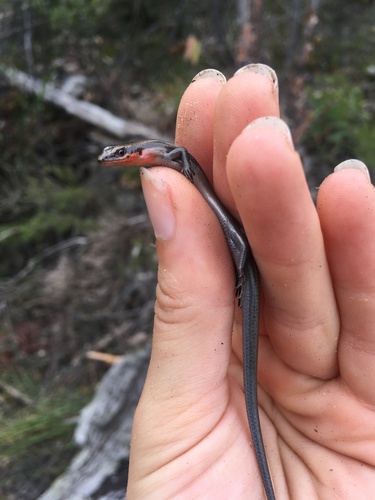
Red-throated Cool-skink
Acritoscincus platynotus

Bar-sided Skink
Concinnia tenuis

Pale-flecked Garden Sunskink
Lampropholis guichenoti

Gully Shadeskink
Saproscincus spectabilis

 Coastal She-oak Slender Bluetongue
Cyclodomorphus michaeli
Global Distribution
Warmer areas are where this animal is recorded most often.
Parks Where Found
| # | Park | Country | Daily sighting probability |
|---|---|---|---|
| 1 | Lamington National Park | 🇦🇺 Australia | |
| 2 | Blue Mountains National Park | 🇦🇺 Australia | |
| 3 | Royal National Park | 🇦🇺 Australia | |
| 4 | Booderee National Park | 🇦🇺 Australia | |
| 5 | Springbrook National Park | 🇦🇺 Australia |
Quick answers
What are the chances of seeing a Eastern Water Skink in Royal National Park?
About 40% of wildlife watchers report a Eastern Water Skink sighting in Royal National Park, based on 149 verified sightings from GBIF citizen-science data.
When is the best time to see Eastern Water Skink in Royal National Park?
February has the highest sighting rate for Eastern Water Skink in Royal National Park in our monthly data.