

Yellow-bellied Three-toed Skink
Saiphos equalis
Silhouette: David Orr · PhyloPic
- KingdomAnimalia (Animals)
- PhylumChordata (Chordates)
- ClassSquamata
- FamilyScincidae (Skinks)
- GenusSaiphos (Three-Toed Skinks)
- SpeciesSaiphos equalis (Yellow-bellied Three-toed Skink)
About the Yellow-bellied Three-toed Skink
Saiphos equalis, commonly known as the yellow-bellied three-toed skink or simply three-toed skink, is a species of burrowing skink found in eastern Australia. It is the only species classified under the genus Saiphos. The lizard has attracted scientific attention due to its dual reproduction habits of producing young via eggs in coastal populations, or via live young in colder mountain regions.
Saiphos equalis grows to a length of 18 cm (7.1 in) including the tail. It has a brown back and an orange belly. The skink is active at night, and feeds on insects. Along the coastal lowlands of Australia, the skink has been observed laying eggs and giving birth to live young for reproduction. Individuals of the species in the lowlands lay eggs (oviparous), while its neighbors to the north in the mountains are almost exclusively giving birth to live young (viviparous).
Saiphos equalis was originally described by the British zoologist John Edward Gray in 1825 as Seps equalis. In 1831, Gray reclassified it under a genus he separately established, Saiphos. Saiphos equalis is now considered to be the only member of the genus Saiphos. It belongs to... Wikipedia →
Recent sightings of Yellow-bellied Three-toed Skink in Royal National Park
LIVEiNaturalistClosest Relatives at Royal National Park

 Eastern Water Skink
Eulamprus quoyii

Copper-tailed Ctenotus
Ctenotus taeniolatus

Common Bluetongue
Tiliqua scincoides

 Cunningham's Skink
Egernia cunninghami

 Rainbow Skink
Lampropholis delicata

Elegant Snake-eyed Skink
Cryptoblepharus pulcher

Southern Weasel Skink
Saproscincus mustelinus
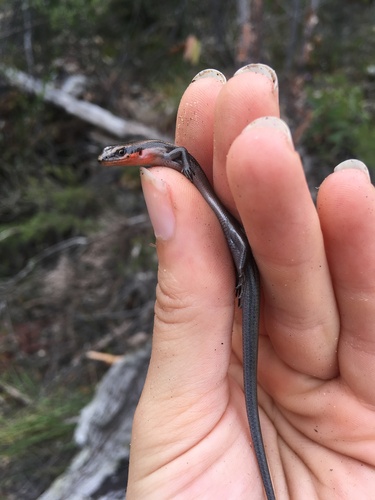
Red-throated Cool-skink
Acritoscincus platynotus

Bar-sided Skink
Concinnia tenuis

Pale-flecked Garden Sunskink
Lampropholis guichenoti

Gully Shadeskink
Saproscincus spectabilis

 Coastal She-oak Slender Bluetongue
Cyclodomorphus michaeli
Global Distribution
Warmer areas are where this animal is recorded most often.
Parks Where Found
| # | Park | Country | Daily sighting probability |
|---|---|---|---|
| 1 | Royal National Park | 🇦🇺 Australia | |
| 2 | Blue Mountains National Park | 🇦🇺 Australia | |
| 3 | Lamington National Park | 🇦🇺 Australia |
Quick answers
What are the chances of seeing a Yellow-bellied Three-toed Skink in Royal National Park?
About 10% of wildlife watchers report a Yellow-bellied Three-toed Skink sighting in Royal National Park, based on 16 verified sightings from GBIF citizen-science data.
When is the best time to see Yellow-bellied Three-toed Skink in Royal National Park?
June has the highest sighting rate for Yellow-bellied Three-toed Skink in Royal National Park in our monthly data.