



Common Bluetongue
Tiliqua scincoides
Silhouette: David Orr · PhyloPic
- KingdomAnimalia (Animals)
- PhylumChordata (Chordates)
- ClassSquamata
- FamilyScincidae (Skinks)
- GenusTiliqua (Bluetongues)
- SpeciesTiliqua scincoides (Common Bluetongue)
About the Common Bluetongue
Tiliqua scincoides is a species of lizard in the subfamily Egerniinae of the family Scincidae (skinks). The species is native to Australia as well Tanimbar Island (Maluku Province, Indonesia). There are three recognized subspecies.
Common names for Tiliqua scincoides include common blue-tongued lizard, common blue-tongued skink, blue-tongued lizard, and common bluetongue. Three subspecies of Tiliqua scincoides are recognized as being valid, including the nominotypical subspecies (listed in chronological order).
Tiliqua scincoides scincoides (White, 1790) – eastern blue-tongued skink (southern/eastern Australia) Tiliqua scincoides intermedia Mitchell, 1955 – northern blue-tongued skink (northern Australia) Tiliqua scincoides chimaera Shea, 2000 – Tanimbar blue-tongued skink (Maluku Province, Indonesia)
Nota bene: A trinomial authority in parentheses indicates that the subspecies was originally described in a genus other than Tiliqua. Tiliqua scincoides is a large species of terrestrial blue-tongue measuring upwards of 60 cm (24 in) in total length (tail included), and over 1 kg (2.2 lb) in mass. It has a stout body and short legs... Wikipedia →
Recent sightings of Common Bluetongue in Royal National Park
LIVEiNaturalistClosest Relatives at Royal National Park

 Eastern Water Skink
Eulamprus quoyii

Copper-tailed Ctenotus
Ctenotus taeniolatus

 Cunningham's Skink
Egernia cunninghami

 Rainbow Skink
Lampropholis delicata

Yellow-bellied Three-toed Skink
Saiphos equalis

Elegant Snake-eyed Skink
Cryptoblepharus pulcher

Southern Weasel Skink
Saproscincus mustelinus
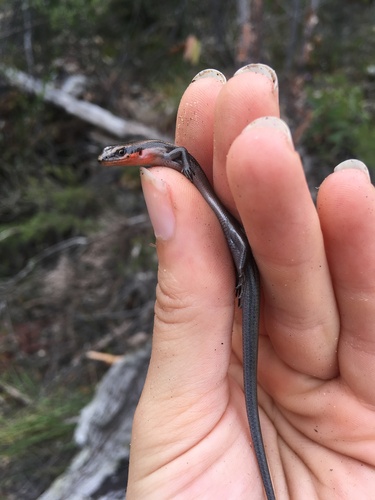
Red-throated Cool-skink
Acritoscincus platynotus

Bar-sided Skink
Concinnia tenuis

Pale-flecked Garden Sunskink
Lampropholis guichenoti

Gully Shadeskink
Saproscincus spectabilis

 Coastal She-oak Slender Bluetongue
Cyclodomorphus michaeli
Global Distribution
Warmer areas are where this animal is recorded most often.
Parks Where Found
| # | Park | Country | Daily sighting probability |
|---|---|---|---|
| 1 | Noosa National Park | 🇦🇺 Australia | |
| 2 | Blue Mountains National Park | 🇦🇺 Australia | |
| 3 | Booderee National Park | 🇦🇺 Australia | |
| 4 | Kakadu National Park | 🇦🇺 Australia | |
| 5 | Royal National Park | 🇦🇺 Australia | |
| 6 | Grampians National Park | 🇦🇺 Australia | |
| 7 | Great Otway National Park | 🇦🇺 Australia | |
| 8 | Litchfield National Park | 🇦🇺 Australia | |
| 9 | Kosciuszko National Park | 🇦🇺 Australia | |
| 10 | Flinders Ranges National Park | 🇦🇺 Australia | |
| 11 | Springbrook National Park | 🇦🇺 Australia | |
| 12 | Daintree National Park | 🇦🇺 Australia | |
| 13 | Lamington National Park | 🇦🇺 Australia |
Quick answers
What are the chances of seeing a Common Bluetongue in Royal National Park?
About 10% of wildlife watchers report a Common Bluetongue sighting in Royal National Park, based on 27 verified sightings from GBIF citizen-science data.
When is the best time to see Common Bluetongue in Royal National Park?
July has the highest sighting rate for Common Bluetongue in Royal National Park in our monthly data.