


Brown Thrasher
Toxostoma rufum
- KingdomAnimalia (Animals)
- PhylumChordata (Chordates)
- ClassAves (Birds)
- OrderPasseriformes (Perching Birds)
- FamilyMimidae (Mockingbirds and Thrashers)
- GenusToxostoma (Typical Thrashers)
- SpeciesToxostoma rufum (Brown Thrasher)
About the Brown Thrasher
The brown thrasher (Toxostoma rufum), sometimes erroneously called the brown thrush or fox-coloured thrush, is a bird in the family Mimidae, which also includes the New World catbirds and mockingbirds. The brown thrasher is abundant throughout the eastern and central United States and southern and central Canada, and it is the only thrasher to live primarily east of the Rockies and central Texas. It is the state bird of Georgia.
As a member of the genus Toxostoma, the bird is relatively large-sized among the other thrashers. It has brown upper parts with a white under part with dark streaks. Because of this, it is often confused with the smaller wood thrush (Hylocichla mustelina), among other species. The brown thrasher is noted for having over 1,000 song types, and the largest song repertoire of birds. However, each note is usually repeated in two or three phrases.
The brown thrasher is an omnivore, with its diet ranging from insects to fruits and nuts. The usual nesting areas are shrubs, small trees, or at times on ground level. Brown thrashers are generally inconspicuous but territorial birds, especially when defending their nests, and will attack species as large as humans.
��2... Wikipedia →
Closest Relatives at Saguaro National Park

Curve-billed Thrasher
Toxostoma curvirostre

Crissal Thrasher
Toxostoma crissale

Bendire's Thrasher
Toxostoma bendirei

Northern Mockingbird
Mimus polyglottos
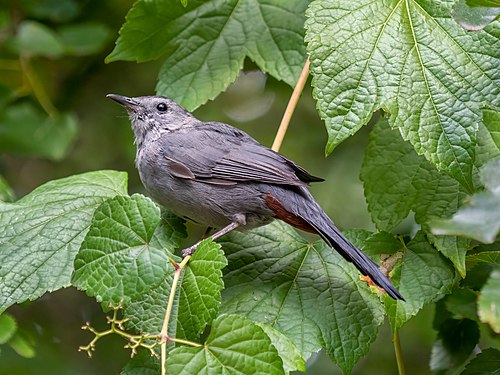
Gray Catbird
Dumetella carolinensis

Sage Thrasher
Oreoscoptes montanus

Verdin
Auriparus flaviceps

House Finch
Haemorhous mexicanus

Lesser Goldfinch
Spinus psaltria

Abert's Towhee
Melozone aberti

Vermilion Flycatcher
Pyrocephalus rubinus

Yellow-rumped Warbler
Setophaga coronata
Global Distribution
Where this species is recorded worldwide. Restricted to human observations from 2019 onwards — the same kind of record and the same period the probabilities on this page are built from, so collar-tracking studies, camera-trap arrays and museum specimens are excluded. Around Santa Rosa that removes 5,924 GPS fixes from a handful of tagged jaguars.
where this species is recorded (GBIF density — it tracks where observers go, not how likely a sighting is) · parks where it occurs — tap a pin for the sighting probability there
Parks Where Found
| # | Park | Country | Daily sighting probability |
|---|---|---|---|
| 1 | Badlands National Park | 🇺🇸 United States | |
| 2 | Great Smoky Mountains National Park | 🇺🇸 United States | |
| 3 | Shenandoah National Park | 🇺🇸 United States | |
| 4 | Point Pelee National Park | 🇨🇦 Canada | |
| 5 | Congaree National Park | 🇺🇸 United States | |
| 6 | Everglades National Park | 🇺🇸 United States | |
| 7 | Big Bend National Park | 🇺🇸 United States | |
| 8 | Riding Mountain National Park | 🇨🇦 Canada | |
| 9 | Big Cypress National Preserve | 🇺🇸 United States | |
| 10 | Guadalupe Mountains National Park | 🇺🇸 United States | |
| 11 | Acadia National Park | 🇺🇸 United States | |
| 12 | Death Valley National Park | 🇺🇸 United States | |
| 13 | Rocky Mountain National Park | 🇺🇸 United States | |
| 14 | Voyageurs National Park | 🇺🇸 United States | |
| 15 | Joshua Tree National Park | 🇺🇸 United States | |
| 16 | Channel Islands National Park | 🇺🇸 United States | |
| 17 | Saguaro National Park | 🇺🇸 United States |