


Varied Thrush
Ixoreus naevius
- KingdomAnimalia (Animals)
- PhylumChordata (Chordates)
- ClassAves (Birds)
- OrderPasseriformes (Perching Birds)
- FamilyTurdidae (Thrushes)
- GenusIxoreus
- SpeciesIxoreus naevius (Varied Thrush)
About the Varied Thrush
The varied thrush (Ixoreus naevius) is a member of the thrush family, Turdidae. It is the only species in the monotypic genus Ixoreus. The varied thrush was formally described by the German naturalist Johann Friedrich Gmelin in 1789 under the binomial name Turdus naevius. Gmelin based his description of the "Spotted thrush" that had been described by John Latham in 1783 from specimens owned by Joseph Banks. These had been collected near Nootka Sound (formerly King George's Sound) which separates Nootka Island from Vancouver Island on the Pacific coast of Canada. The varied thrush is now the only species placed in the genus Ixoreus that was introduced by Charles Lucien Bonaparte in 1854. The genus name Ixoreus comes from the Ancient Greek ixos meaning "mistletoe". This was a synonym of a former name for the mockingbird genus, Mimus; Bonaparte assumed wrongly that, because William Swainson had shown a mockingbird and this thrush on the same plate of his book, they were related. The specific naevius is Latin for "spotted" from naevus meaning "spot".
Four subspecies are recognised: I. n. meruloides – (Swainson, 1832): Found in south Alaska and northwestern Canada I. n.... Wikipedia →
Closest Relatives at Saguaro National Park

American Robin
Turdus migratorius
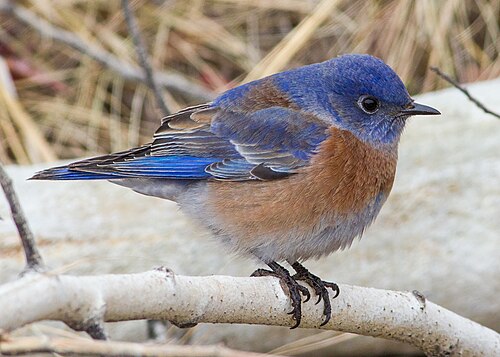
Western Bluebird
Sialia mexicana

Hermit Thrush
Catharus guttatus

Townsend's Solitaire
Myadestes townsendi

Mountain Bluebird
Sialia currucoides

Eastern Bluebird
Sialia sialis

Rufous-backed Robin
Turdus rufopalliatus

Swainson's Thrush
Catharus ustulatus

Verdin
Auriparus flaviceps

House Finch
Haemorhous mexicanus

Lesser Goldfinch
Spinus psaltria

Abert's Towhee
Melozone aberti
Global Distribution
Where this species is recorded worldwide. Restricted to human observations from 2019 onwards — the same kind of record and the same period the probabilities on this page are built from, so collar-tracking studies, camera-trap arrays and museum specimens are excluded. Around Santa Rosa that removes 5,924 GPS fixes from a handful of tagged jaguars.
where this species is recorded (GBIF density — it tracks where observers go, not how likely a sighting is) · parks where it occurs — tap a pin for the sighting probability there