


Dry Forest Toad
Incilius coccifer
Silhouette: Jose Carlos Arenas-Monroy · PhyloPic
- KingdomAnimalia (Animals)
- PhylumChordata (Chordates)
- ClassAmphibia (Amphibians)
- OrderAnura (Frogs and Toads)
- FamilyBufonidae (True Toads)
- GenusIncilius (Central American Toads)
- SpeciesIncilius coccifer (Dry Forest Toad)
About the Dry Forest Toad
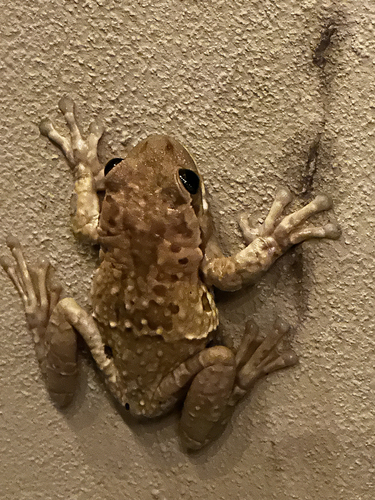
Incilius coccifer (common name: southern round-gland toad or southern roundgland toad) is a species of toad in the family Bufonidae. It is found in southern Mexico and southeastward in the Central America through Guatemala, El Salvador, Honduras, and Nicaragua to northwestern Costa Rica. Several species that were formerly included in this species have been named as distinct species: Incilius porteri, Incilius ibarrai, Incilius pisinnus, and Incilius signifer. Its natural habitats are lowland dry and moist forests, and it occurs also in disturbed areas such as pastures, roadside ditches, gardens, and vacant lots in urban areas. It is an abundant and widespread species that is not facing significant threats. Wikipedia →
Recent sightings of Dry Forest Toad in Santa Rosa National Park
LIVEiNaturalistClosest Relatives at Santa Rosa National Park

 Yellow Toad
Incilius luetkenii

Wet Forest Toad
Incilius melanochlorus

 Giant Marine Toad
Rhinella horribilis
 Milk Frog
Trachycephalus macrotis

 Sheep Frog
Hypopachus variolosus

 Mexican Smilisca
Smilisca baudinii

 Guayaquil Dwarf Frog
Engystomops pustulosus

Stauffer's Tree Frog
Scinax staufferi

 Forrer's Grass Frog
Lithobates forreri

 Turbo White-lipped Frog
Leptodactylus poecilochilus

 Mexican Burrowing Toad
Rhinophrynus dorsalis

Yellow Treefrog
Dendropsophus microcephalus
Global Distribution
Warmer areas are where this animal is recorded most often.
Parks Where Found
| # | Park | Country | Daily sighting probability |
|---|---|---|---|
| 1 | Santa Rosa National Park | 🇨🇷 Costa Rica | |
| 2 | Carara National Park | 🇨🇷 Costa Rica | |
| 3 | Rincón de la Vieja National Park | 🇨🇷 Costa Rica | |
| 4 | Palo Verde National Park | 🇨🇷 Costa Rica | |
| 5 | Celaque National Park | 🇭🇳 Honduras | |
| 6 | Ostional Wildlife Refuge | 🇨🇷 Costa Rica | |
| 7 | Tenorio Volcano National Park | 🇨🇷 Costa Rica | |
| 8 | Cabo Blanco Absolute Nature Reserve | 🇨🇷 Costa Rica |
Quick answers
What are the chances of seeing a Dry Forest Toad in Santa Rosa National Park?
About 30% of wildlife watchers report a Dry Forest Toad sighting in Santa Rosa National Park, based on 15 verified sightings from GBIF citizen-science data.
When is the best time to see Dry Forest Toad in Santa Rosa National Park?
September has the highest sighting rate for Dry Forest Toad in Santa Rosa National Park in our monthly data.