



Mexican Smilisca
Smilisca baudinii
Silhouette: Dmitry Bogdanov (vectorized by T. Michael Keesey) · PhyloPic
- KingdomAnimalia (Animals)
- PhylumChordata (Chordates)
- ClassAmphibia (Amphibians)
- OrderAnura (Frogs and Toads)
- FamilyHylidae (Hylid Tree Frogs)
- GenusSmilisca (Cross-banded Tree Frogs)
- SpeciesSmilisca baudinii (Mexican Smilisca)
About the Mexican Smilisca
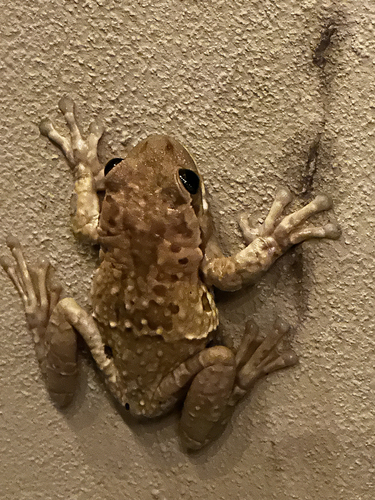
The common Mexican tree frog (Smilisca baudinii) is a nocturnal species of tree frog whose native range extends from the Sonoran Desert and the Lower Rio Grande Valley of Texas south to Costa Rica. Common names include Mexican tree frog, Baudin's tree frog and Van Vliet's frog. They are usually found within lightly forested areas near permanent sources of water.
The common Mexican tree frog is generally brown-grey in color, with darker brown, irregular blotching. Its underside is typically a lighter grey or white. Its legs have distinctive dark banding. The species has numerous synonymous classifications due to disjunct populations, and was mistakenly redescribed on several occasions by field researchers.
The common Mexican tree frog is considered to be a threatened species in the US state of Texas. It has only been reported in a few counties, and no estimates of its actual population count have been made. Amphibian Species of the World: Smilisca baudinii
Davidson College department of biology: Smilisca baudinii Data related to Common Mexican tree frog at Wikispecies Media related to Smilisca... Wikipedia →
Recent sightings of Mexican Smilisca in Santa Rosa National Park
LIVEiNaturalistClosest Relatives at Santa Rosa National Park
 Milk Frog
Trachycephalus macrotis

 Stauffer's Tree Frog
Scinax staufferi

Yellow Treefrog
Dendropsophus microcephalus

Boulenger's Snouted Tree Frog
Scinax boulengeri

Harlequin Treefrog
Dendropsophus ebraccatus

 Sheep Frog
Hypopachus variolosus

 Giant Marine Toad
Rhinella horribilis

 Guayaquil Dwarf Frog
Engystomops pustulosus

 Yellow Toad
Incilius luetkenii

 Forrer's Grass Frog
Lithobates forreri

 Turbo White-lipped Frog
Leptodactylus poecilochilus

 Mexican Burrowing Toad
Rhinophrynus dorsalis
Global Distribution
Warmer areas are where this animal is recorded most often.
Parks Where Found
Quick answers
What are the chances of seeing a Mexican Smilisca in Santa Rosa National Park?
About 50% of wildlife watchers report a Mexican Smilisca sighting in Santa Rosa National Park, based on 62 verified sightings from GBIF citizen-science data.
When is the best time to see Mexican Smilisca in Santa Rosa National Park?
June has the highest sighting rate for Mexican Smilisca in Santa Rosa National Park in our monthly data.