


Mexican Burrowing Toad
Rhinophrynus dorsalis
Silhouette: Jose Carlos Arenas-Monroy · PhyloPic
- KingdomAnimalia (Animals)
- PhylumChordata (Chordates)
- ClassAmphibia (Amphibians)
- OrderAnura (Frogs and Toads)
- FamilyRhinophrynidae (Mexican burrowing toads)
- GenusRhinophrynus (Mexican Burrowing Toads)
- SpeciesRhinophrynus dorsalis (Mexican Burrowing Toad)
About the Mexican Burrowing Toad
The Mexican burrowing toad (Rhinophrynus dorsalis) is the single living representative of the family Rhinophrynidae. It is a unique species in its taxonomy and morphology, with special adaptations to assist them in digging burrows where they spend most of their time. These adaptations include a small pointed snout and face, keratinized structures and a lack of webbing on front limbs, and specialized tongue morphology to assist in feeding on ants and termites underground. The body is nearly equal in width and length. It is a dark brown to black color with a red-orange stripe on its back along with splotches of color on its body. The generic name Rhinophrynus means 'nose-toad', from rhino- (ῥῑνο-), the combining form of the Ancient Greek rhis (ῥίς, 'nose') and phrunē (φρύνη, 'toad').
The Mexican burrowing toad diverged from other amphibians over 190 million years ago and has been evolving independently for a longer period of time than the evolutionary differences between mammals like humans, fruit bats, polar bears and killer whales. Its closest sister group is Pipidae, or the aquatic clawed frogs.
The Mexican burrowing toad has a unique appearance that makes it easy... Wikipedia →
Recent sightings of Mexican Burrowing Toad in Santa Rosa National Park
LIVEiNaturalistClosest Relatives at Santa Rosa National Park
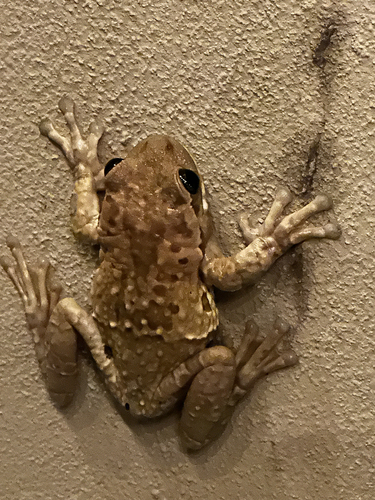
 Milk Frog
Trachycephalus macrotis

 Sheep Frog
Hypopachus variolosus

 Mexican Smilisca
Smilisca baudinii

 Giant Marine Toad
Rhinella horribilis

 Guayaquil Dwarf Frog
Engystomops pustulosus

 Yellow Toad
Incilius luetkenii

Stauffer's Tree Frog
Scinax staufferi

 Forrer's Grass Frog
Lithobates forreri

 Turbo White-lipped Frog
Leptodactylus poecilochilus

Dry Forest Toad
Incilius coccifer

Yellow Treefrog
Dendropsophus microcephalus

Mexican White-lipped Frog
Leptodactylus fragilis
Global Distribution
Warmer areas are where this animal is recorded most often.
Parks Where Found
| # | Park | Country | Daily sighting probability |
|---|---|---|---|
| 1 | Palo Verde National Park | 🇨🇷 Costa Rica | |
| 2 | Santa Rosa National Park | 🇨🇷 Costa Rica | |
| 3 | Calakmul Biosphere Reserve | 🇲🇽 Mexico | |
| 4 | Biotopo Cerro Cahuí | 🇬🇹 Guatemala | |
| 5 | Cockscomb Basin Wildlife Sanctuary | 🇧🇿 Belize | |
| 6 | Sian Ka'an Biosphere Reserve | 🇲🇽 Mexico | |
| 7 | Montes Azules Biosphere Reserve | 🇲🇽 Mexico |
Quick answers
What are the chances of seeing a Mexican Burrowing Toad in Santa Rosa National Park?
About 30% of wildlife watchers report a Mexican Burrowing Toad sighting in Santa Rosa National Park, based on 17 verified sightings from GBIF citizen-science data.
When is the best time to see Mexican Burrowing Toad in Santa Rosa National Park?
June has the highest sighting rate for Mexican Burrowing Toad in Santa Rosa National Park in our monthly data.