

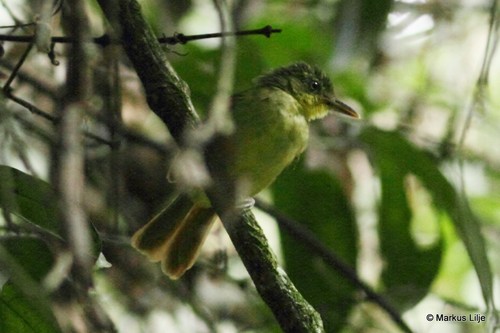
Rufous-sided Broadbill
Smithornis rufolateralis
Silhouette: Sheatherius · PhyloPic
- KingdomAnimalia (Animals)
- PhylumChordata (Chordates)
- ClassAves (Birds)
- OrderPasseriformes (Perching Birds)
- FamilyEurylaimidae (Asian and Grauer's Broadbills)
- GenusSmithornis (African Broadbills)
- SpeciesSmithornis rufolateralis (Rufous-sided Broadbill)
About the Rufous-sided Broadbill
The rufous-sided broadbill (Smithornis rufolateralis) is a species of bird in the family Calyptomenidae. It is sparsely distributed throughout the Guineo-Congolian region. Its natural habitat is subtropical or tropical moist lowland forests. Wikipedia →
Recent sightings of Rufous-sided Broadbill in Semuliki National Park
LIVEiNaturalistClosest Relatives at Semuliki National Park

 Crested Malimbe
Malimbus malimbicus

 Red-tailed Greenbul
Criniger calurus

Western Nicator
Nicator chloris

 Fraser's Rufous Thrush
Stizorhina fraseri
Xavier's Greenbul
Phyllastrephus xavieri

Red-tailed Ant-Thrush
Neocossyphus rufus

 Common Bulbul
Pycnonotus barbatus

Little Greenbul
Eurillas virens

 Black-headed Paradise-Flycatcher
Terpsiphone rufiventer

Green-backed Camaroptera
Camaroptera brachyura

 Green Crombec
Sylvietta virens

 Fire-crested Alethe
Alethe castanea
Global Distribution
Warmer areas are where this animal is recorded most often.
Parks Where Found
| # | Park | Country | Daily sighting probability |
|---|---|---|---|
| 1 | Semuliki National Park | 🇺🇬 Uganda | |
| 2 | Bwindi Impenetrable National Park | 🇺🇬 Uganda | |
| 3 | Virunga National Park | 🇨🇩 Democratic Republic of the Congo |
Quick answers
What are the chances of seeing a Rufous-sided Broadbill in Semuliki National Park?
About 10% of wildlife watchers report a Rufous-sided Broadbill sighting in Semuliki National Park, based on 50 verified sightings from GBIF citizen-science data.
When is the best time to see Rufous-sided Broadbill in Semuliki National Park?
July has the highest sighting rate for Rufous-sided Broadbill in Semuliki National Park in our monthly data.