



Fraser's Rufous Thrush
Stizorhina fraseri
Silhouette: Francesco "Architetto" Rollandin · PhyloPic
- KingdomAnimalia (Animals)
- PhylumChordata (Chordates)
- ClassAves (Birds)
- OrderPasseriformes (Perching Birds)
- FamilyTurdidae (Thrushes)
- GenusStizorhina (Flycatcher-Thrushes)
- SpeciesStizorhina fraseri (Fraser's Rufous Thrush)
About the Fraser's Rufous Thrush
Fraser's rufous thrush (Stizorhina fraseri), also known as the rufous flycatcher-thrush, is a species of bird in the thrush family. It is found in easternmost West Africa (Nigeria), widely in Central Africa (Angola, Cameroon, Central African Republic, Republic of the Congo, Democratic Republic of the Congo, Equatorial Guinea, Gabon) and into East Africa (South Sudan, Uganda, and Zambia). Its natural habitat is subtropical or tropical moist lowland forests.
del Hoyo, J.; Elliott, A.; Sargatal, J. (2005), Handbook of the Birds of the World. Vol. 10: Cuckoo-shrikes to Thrushes, Barcelona: Lynx Edicions, ISBN 978-84-87334-72-6 Wikipedia →
Recent sightings of Fraser's Rufous Thrush in Semuliki National Park
LIVEiNaturalistClosest Relatives at Semuliki National Park

 Red-tailed Ant-Thrush
Neocossyphus rufus

 Fire-crested Alethe
Alethe castanea

 African Thrush
Turdus pelios

White-tailed Ant-Thrush
Neocossyphus poensis

 Crested Malimbe
Malimbus malimbicus

 Red-tailed Greenbul
Criniger calurus

Western Nicator
Nicator chloris
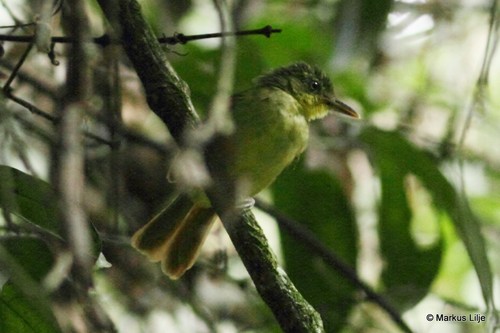
Xavier's Greenbul
Phyllastrephus xavieri

 Common Bulbul
Pycnonotus barbatus

Little Greenbul
Eurillas virens

 Black-headed Paradise-Flycatcher
Terpsiphone rufiventer

Green-backed Camaroptera
Camaroptera brachyura
Global Distribution
Warmer areas are where this animal is recorded most often.
Parks Where Found
| # | Park | Country | Daily sighting probability |
|---|---|---|---|
| 1 | Semuliki National Park | 🇺🇬 Uganda | |
| 2 | Kibale National Park | 🇺🇬 Uganda | |
| 3 | Bwindi Impenetrable National Park | 🇺🇬 Uganda | |
| 4 | Virunga National Park | 🇨🇩 Democratic Republic of the Congo | |
| 5 | Queen Elizabeth National Park | 🇺🇬 Uganda | |
| 6 | Murchison Falls National Park | 🇺🇬 Uganda | |
| 7 | Lake Mburo National Park | 🇺🇬 Uganda |
Quick answers
What are the chances of seeing a Fraser's Rufous Thrush in Semuliki National Park?
About 60% of wildlife watchers report a Fraser's Rufous Thrush sighting in Semuliki National Park, based on 249 verified sightings from GBIF citizen-science data.
When is the best time to see Fraser's Rufous Thrush in Semuliki National Park?
December has the highest sighting rate for Fraser's Rufous Thrush in Semuliki National Park in our monthly data.