



Western Nicator
Nicator chloris
Silhouette: Sheatherius · PhyloPic
- KingdomAnimalia (Animals)
- PhylumChordata (Chordates)
- ClassAves (Birds)
- OrderPasseriformes (Perching Birds)
- FamilyNicatoridae (Nicators)
- GenusNicator (Nicators)
- SpeciesNicator chloris (Western Nicator)
About the Western Nicator
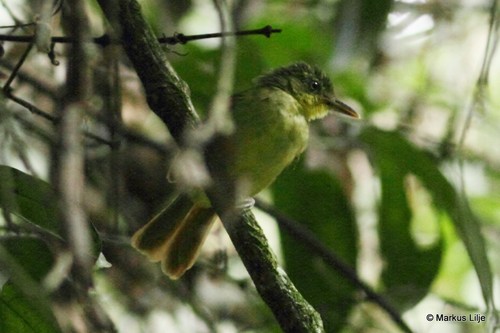
The western nicator (Nicator chloris) is a species of songbird in the family Nicatoridae. It is very similar to the eastern nicator, but the sides of the face and crown are olive green. It is best identified by its range and some of its vocalizations.
It is mainly native to the African tropical rainforest. It inhabits subtropical or tropical moist lowland forest and subtropical or tropical swamps. It prefers well-established secondary growth forest from 700 to 1,850 metres (2,300 to 6,070 ft).
Media related to Nicator chloris at Wikimedia Commons Wikipedia →
Recent sightings of Western Nicator in Semuliki National Park
LIVEiNaturalistClosest Relatives at Semuliki National Park

 Yellow-throated Nicator
Nicator vireo

Crested Malimbe
Malimbus malimbicus

 Red-tailed Greenbul
Criniger calurus

 Fraser's Rufous Thrush
Stizorhina fraseri
Xavier's Greenbul
Phyllastrephus xavieri

Red-tailed Ant-Thrush
Neocossyphus rufus

 Common Bulbul
Pycnonotus barbatus

Little Greenbul
Eurillas virens

 Black-headed Paradise-Flycatcher
Terpsiphone rufiventer

Green-backed Camaroptera
Camaroptera brachyura

 Green Crombec
Sylvietta virens

 Fire-crested Alethe
Alethe castanea
Global Distribution
Warmer areas are where this animal is recorded most often.
Parks Where Found
| # | Park | Country | Daily sighting probability |
|---|---|---|---|
| 1 | Semuliki National Park | 🇺🇬 Uganda | |
| 2 | Kibale National Park | 🇺🇬 Uganda | |
| 3 | Queen Elizabeth National Park | 🇺🇬 Uganda | |
| 4 | Bwindi Impenetrable National Park | 🇺🇬 Uganda | |
| 5 | Virunga National Park | 🇨🇩 Democratic Republic of the Congo |
Quick answers
What are the chances of seeing a Western Nicator in Semuliki National Park?
About 60% of wildlife watchers report a Western Nicator sighting in Semuliki National Park, based on 269 verified sightings from GBIF citizen-science data.
When is the best time to see Western Nicator in Semuliki National Park?
August has the highest sighting rate for Western Nicator in Semuliki National Park in our monthly data.