


Spotted Foam-nest Frog
Leptodactylus insularum
Silhouette: Jose Carlos Arenas-Monroy · PhyloPic
- KingdomAnimalia (Animals)
- PhylumChordata (Chordates)
- ClassAmphibia (Amphibians)
- OrderAnura (Frogs and Toads)
- FamilyLeptodactylidae (Southern Frogs)
- GenusLeptodactylus (Neotropical Grass Frogs)
- SpeciesLeptodactylus insularum (Spotted Foam-nest Frog)
About the Spotted Foam-nest Frog
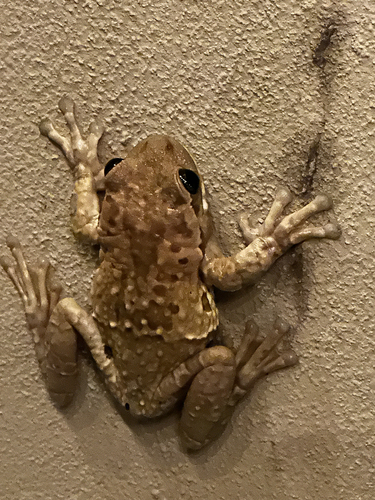
Leptodactylus insularum (San Miguel Island frog or Caribbean ditch frog) is a species of frog in the family Leptodactylidae. The species is found in Costa Rica, Panama, Colombia, Venezuela, and Trinidad and Tobago. Scientists suspect it might also live in Bolivia.
The adult male frog measures 66–104.6 mm in snout-vent length and the adult female frog 60.4–99.1 mm. The skin of the dorusm has several folds and dark marks on it. There is a dark line from the nose to each eye. The backs of the legs have a dark pattern on them with light spots in irregular shapes. The flanks are light brown with dark brown spots. The belly is very light brown in color. The adult frogs use the aposematic coloration on their legs to confuse predators.
These frogs live in forests near streams. Scientists saw the frog in many protected places. The adult frogs eat water insects, such as those of the families Elateridae, Formicidae, Belastomatidae, and Lycosidae. The tadpoles feed on decaying matter, often things that have fallen into the water.
The male frog makes a foam nest for the eggs. The female frog can lay 2000 eggs per clutch. The female frog... Wikipedia →
Recent sightings of Spotted Foam-nest Frog in Tayrona National Natural Park
LIVEiNaturalistClosest Relatives at Tayrona National Natural Park

 Whistling Grass Frog
Leptodactylus fuscus

Savage's Thin-toed Frog
Leptodactylus savagei

 Guayaquil Dwarf Frog
Engystomops pustulosus

 Colombian Four-eyed Frog
Pleurodema brachyops

 Yellow-striped Poison Frog
Dendrobates truncatus

 Giant Marine Toad
Rhinella horribilis

Rivero's Toad
Rhinella humboldti

 Yellow Treefrog
Dendropsophus microcephalus

 Banana Tree Dwelling Frog
Boana platanera

Chirique-Flusse Tree Frog
Boana pugnax
 Milk Frog
Trachycephalus macrotis

Red Snouted Tree Frog
Scinax ruber
Global Distribution
Warmer areas are where this animal is recorded most often.
Parks Where Found
| # | Park | Country | Daily sighting probability |
|---|---|---|---|
| 1 | Tayrona National Natural Park | 🇨🇴 Colombia | |
| 2 | Soberanía National Park | 🇵🇦 Panama | |
| 3 | Piedras Blancas National Park | 🇨🇷 Costa Rica | |
| 4 | Darién National Park | 🇵🇦 Panama | |
| 5 | Corcovado National Park | 🇨🇷 Costa Rica | |
| 6 | Marino Ballena National Park | 🇨🇷 Costa Rica | |
| 7 | Henri Pittier National Park | 🇻🇪 Venezuela | |
| 8 | Chagres National Park | 🇵🇦 Panama | |
| 9 | Manuel Antonio National Park | 🇨🇷 Costa Rica |
Quick answers
What are the chances of seeing a Spotted Foam-nest Frog in Tayrona National Natural Park?
About 40% of wildlife watchers report a Spotted Foam-nest Frog sighting in Tayrona National Natural Park, based on 28 verified sightings from GBIF citizen-science data.
When is the best time to see Spotted Foam-nest Frog in Tayrona National Natural Park?
May has the highest sighting rate for Spotted Foam-nest Frog in Tayrona National Natural Park in our monthly data.