


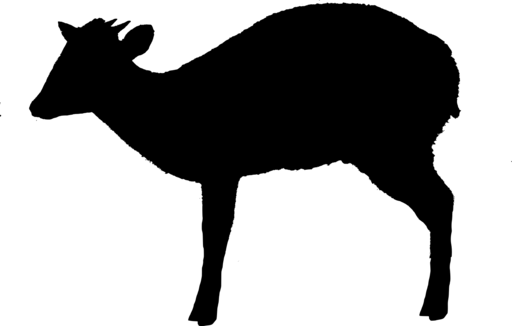
Natal Duiker
Cephalophus natalensis
Silhouette: Kai Caspar · PhyloPic
- KingdomAnimalia (Animals)
- PhylumChordata (Chordates)
- ClassMammalia (Mammals)
- OrderArtiodactyla (Even-toed Ungulates and Cetaceans)
- FamilyBovidae (Bovids)
- GenusCephalophus (Forest Duikers)
- SpeciesCephalophus natalensis (Natal Duiker)
About the Natal Duiker
The red forest duiker, Natal duiker, or Natal red duiker (Cephalophus natalensis) is a small antelope found in central to southern Africa. It is one of 22 extant species form the subfamily Cephalophinae. While the red forest duiker is very similar to the common duiker, it is smaller in size and has a distinguishing reddish coloring. Additionally, the red forest duiker favors a denser bush habitat than the common duiker. The Natal red duiker is more diurnal and less secretive than most forest duikers, so therefore it is easier for them to be observed. In 1999, red forest duikers had an estimated wild population of 42,000 individuals.
Red forest duikers have a body length of up to 1 m (3.3 ft), a typical shoulder height of 43 cm (17 in), and an average mass of 14 kg (31 lb). Both sexes have short, straight horns about 6 cm (2.4 in) long, although in females they may be smaller in size. Towards the base, the horns have coarse rings and longitudinal striations, but they are smooth towards the tips. The longest recorded length of horns for the red forest duiker is 11 cm (4.3 in).
The red forest duiker is a rich reddish-brown in color, although the underparts are typically... Wikipedia →
Recent sightings of Natal Duiker in Tsavo East National Park
LIVEiNaturalistClosest Relatives at Tsavo East National Park

 Impala
Aepyceros melampus

 Hartebeest
Alcelaphus buselaphus

 Grant's Gazelle
Nanger granti

 Waterbuck
Kobus ellipsiprymnus

 African Buffalo
Syncerus caffer

 East African Oryx
Oryx beisa

 Lesser Kudu
Tragelaphus imberbis

 Gerenuk
Litocranius walleri

 Common Eland
Taurotragus oryx
Hirola
Beatragus hunteri

Blue Wildebeest
Connochaetes taurinus

Suni
Neotragus moschatus
Global Distribution
Warmer areas are where this animal is recorded most often.
Parks Where Found
| # | Park | Country | Daily sighting probability |
|---|---|---|---|
| 1 | Arusha National Park | 🇹🇿 Tanzania | |
| 2 | iSimangaliso Wetland Park | 🇿🇦 South Africa | |
| 3 | Gorongosa National Park | 🇲🇿 Mozambique | |
| 4 | Hluhluwe-Imfolozi Park | 🇿🇦 South Africa | |
| 5 | Kruger National Park | 🇿🇦 South Africa | |
| 6 | Tsavo East National Park | 🇰🇪 Kenya |