



Common tent-making Bat
Uroderma bilobatum
Silhouette: Roberto Díaz Sibaja · PhyloPic
- KingdomAnimalia (Animals)
- PhylumChordata (Chordates)
- ClassMammalia (Mammals)
- OrderChiroptera (Bats)
- FamilyPhyllostomidae (New World Leaf-nosed Bats)
- GenusUroderma (Tent-making Bats)
- SpeciesUroderma bilobatum (Common tent-making Bat)
About the Common tent-making Bat
The tent-making bat (Uroderma bilobatum) is an American leaf-nosed bat (Phyllostomidae) found in lowland forests of Central and South America. This medium-sized bat has a gray coat with a pale white stripe running down the middle of the back. Its face is characterized by a fleshy nose-leaf and four white stripes. Primarily a frugivore, it may supplement its diet with insects, flower parts, pollen, and nectar. Its common name comes from its behavior of constructing tents out of large, fan-shaped leaves. These roosts provide excellent protection from the tropical rains, and a single tent roost may house several bats at once. This bat is quite common in its geographic range; hence, its conservation status is listed as Least Concern.
The bat Uroderma bilobatum is a member of the family Phyllostomidae, which contains 49 genera and a greater variety in feeding habits than any other bat family. Carnivores, frugivores, and bats that specialize on blood or nectar and pollen are all represented in this family. Commonly known as the American leaf-nosed bats, phyllostomids are characterized by a special structure consisting of a leaf-shaped projection extending up from a "horseshoe... Wikipedia →
Recent sightings of Common tent-making Bat in Arenal Volcano National Park
LIVEiNaturalistClosest Relatives at Arenal Volcano National Park

 Vampire Bat
Desmodus rotundus

Tomes's Sword-nosed Bat
Lonchorhina aurita
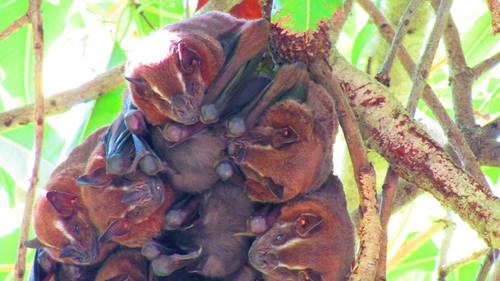
 Great Fruit-eating Bat
Artibeus lituratus

Jamaican Fruit-eating Bat
Artibeus jamaicensis

Common Big-eared Bat
Micronycteris microtis

Northern Little Yellow-eared Bat
Vampyressa thyone

Proboscis Bat
Rhynchonycteris naso

 Thomas's Shaggy Bat
Centronycteris centralis

Greater Sac-winged Bat
Saccopteryx bilineata

Lesser Sac-winged Bat
Saccopteryx leptura
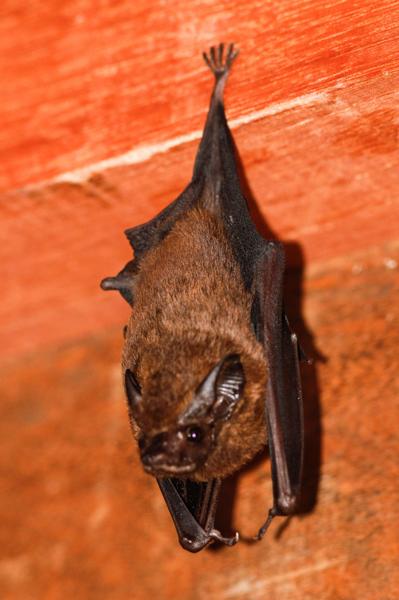
Chestnut Sac-winged Bat
Cormura brevirostris
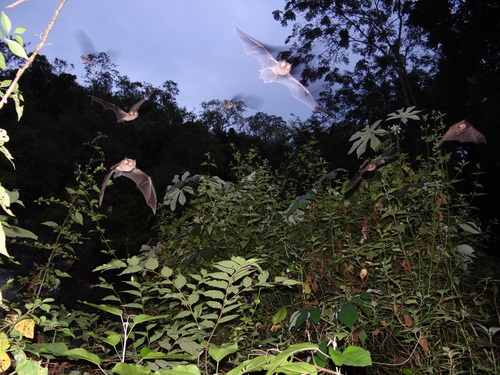
Mesoamerican Common Mustached Bat
Pteronotus mesoamericanus
Global Distribution
Warmer areas are where this animal is recorded most often.
Parks Where Found
| # | Park | Country | Daily sighting probability |
|---|---|---|---|
| 1 | Manuel Antonio National Park | 🇨🇷 Costa Rica | |
| 2 | Soberanía National Park | 🇵🇦 Panama | |
| 3 | Piedras Blancas National Park | 🇨🇷 Costa Rica | |
| 4 | Tayrona National Natural Park | 🇨🇴 Colombia | |
| 5 | Corcovado National Park | 🇨🇷 Costa Rica | |
| 6 | Braulio Carrillo National Park | 🇨🇷 Costa Rica | |
| 7 | Carara National Park | 🇨🇷 Costa Rica | |
| 8 | Chagres National Park | 🇵🇦 Panama | |
| 9 | Ostional Wildlife Refuge | 🇨🇷 Costa Rica | |
| 10 | Cordillera Azul National Park | 🇵🇪 Peru | |
| 11 | Bastimentos Island National Marine Park | 🇵🇦 Panama | |
| 12 | Yasuní National Park | 🇪🇨 Ecuador | |
| 13 | Darién National Park | 🇵🇦 Panama | |
| 14 | Arenal Volcano National Park | 🇨🇷 Costa Rica | |
| 15 | Tortuguero National Park | 🇨🇷 Costa Rica | |
| 16 | Cuyabeno Wildlife Reserve | 🇪🇨 Ecuador | |
| 17 | Tapantí-Macizo de la Muerte National Park | 🇨🇷 Costa Rica | |
| 18 | Manu National Park | 🇵🇪 Peru | |
| 19 | La Amistad International Park (Panama) | 🇵🇦 Panama | |
| 20 | Monteverde Cloud Forest Reserve | 🇨🇷 Costa Rica |