



Speckled Racer
Drymobius margaritiferus
Silhouette: Alex Slavenko · PhyloPic
- KingdomAnimalia (Animals)
- PhylumChordata (Chordates)
- ClassSquamata
- FamilyColubridae (Colubrid Snakes)
- GenusDrymobius (Speckled Racers)
- SpeciesDrymobius margaritiferus (Speckled Racer)
About the Speckled Racer
Drymobius margaritiferus, commonly known as the speckled racer, is a species of nonvenomous colubrid snake native to the Americas. The specific name, margaritiferus, means "pearl-bearing" in Latin, referring to the pearl-like spots on the dorsal scales.
This species ranges throughout Central America from the Isthmus of Tehuantepec and Yucatán Peninsula, southward to Panama and adjacent areas of northwest Colombia, occurring at elevations from sea level up to 4,750 feet (1,453 m). Northward, it is found in the coastal lowlands and lower exterior slopes of the Sierra Madres of Mexico, up the west coast to Sonora, and up the east coast to northern Tamaulipas. The northern limit of its distribution ranges into extreme south Texas, USA, where it is uncommon to rare in a few of the southernmost counties of the state.
Speckled racers occur in a wide variety of habitats, including: forest, forest edges and clearings, secondary growth, riparian zones, savannahs, marshlands, pastures, and roadsides. It is often said to favor humid and wet areas with permanent water sources. However, these snakes have been found in areas where no water was apparent, and habitats... Wikipedia →
Recent sightings of Speckled Racer in Cahuita National Park
LIVEiNaturalistClosest Relatives at Cahuita National Park
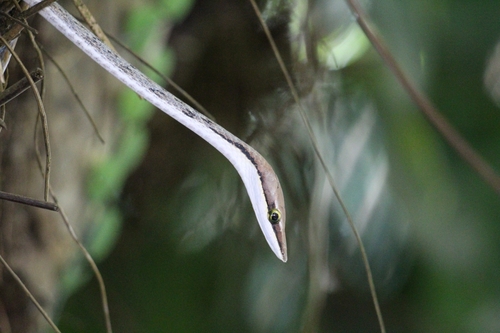
 Köhler’s Vine Snake
Oxybelis koehleri

 Blunthead Tree Snake
Imantodes cenchoa
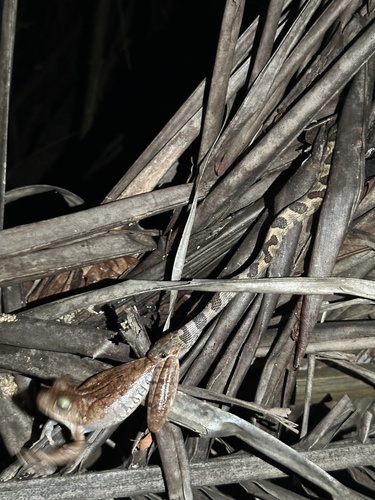
 Ornate Cat-eyed Snake
Leptodeira ornata
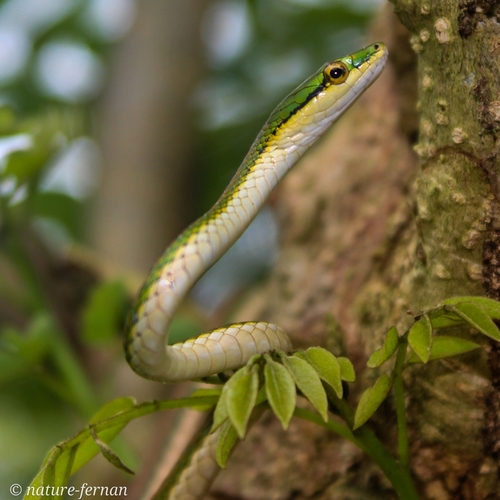
Oliver's Parrot Snake
Leptophis nebulosus

American Snail-eater
Dipsas articulata

Cloudy Snail-eating Snake
Sibon nebulatus

Ringed Snail Sucker
Sibon annulatus

Cope's Vine Snake
Oxybelis brevirostris

Puffing Snake
Phrynonax poecilonotus
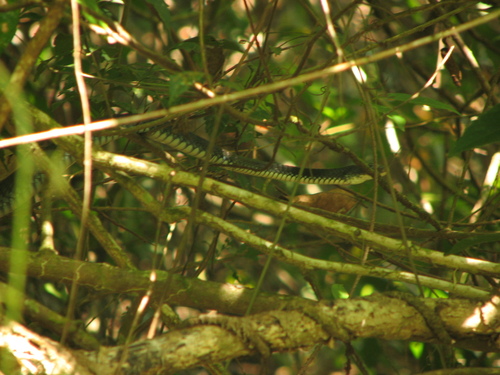
Werner's Sipo
Chironius flavopictus

Common Neckband Snake
Scaphiodontophis venustissimus

False Tree Coral
Rhinobothryum bovallii
Global Distribution
Warmer areas are where this animal is recorded most often.