


Minke Whale
Balaenoptera acutorostrata
- KingdomAnimalia (Animals)
- PhylumChordata (Chordates)
- ClassMammalia (Mammals)
- OrderCetacea
- FamilyBalaenopteridae (Rorquals)
- GenusBalaenoptera
- SpeciesBalaenoptera acutorostrata (Minke Whale)
About the Minke Whale
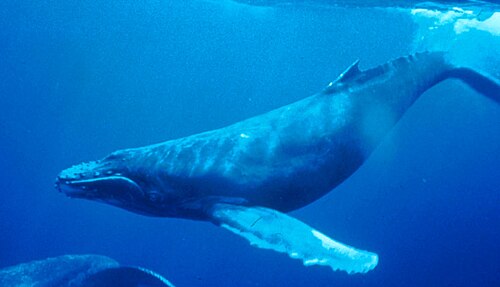
The common minke whale or northern minke whale (Balaenoptera acutorostrata) is a species of minke whale within the suborder of baleen whales. It is the smallest species of the rorquals and the second smallest species of baleen whale. Although first ignored by whalers due to its small size and low oil yield, it began to be exploited by various countries beginning in the early 20th century. As other species declined, larger numbers of common minke whales were caught, largely for their meat. It is now one of the primary targets of the whaling industry. There is a dwarf form in the Southern Hemisphere.
This species is known in the fossil record from the Pliocene epoch to the Quaternary period (age range: 4.7 million years ago to present day). The origins of the species' common name are obscure. One of the first references to the name came in Henrik Johan Bull's account of his 1893–95 voyage to the Antarctic, when he mentioned catching a small whale "called in the Arctic language a Mencke whale, after a German who accompanied Mr. Foyn on some of his voyages." According to the British writer John Guille Millais (The mammals of Great Britain and Ireland, 1906, vol. 3... Wikipedia →


Global Distribution
Where this species is recorded worldwide. Restricted to human observations from 2019 onwards — the same kind of record and the same period the probabilities on this page are built from, so collar-tracking studies, camera-trap arrays and museum specimens are excluded. Around Santa Rosa that removes 5,924 GPS fixes from a handful of tagged jaguars.
where this species is recorded (GBIF density — it tracks where observers go, not how likely a sighting is) · parks where it occurs — tap a pin for the sighting probability there
Parks Where Found
| # | Park | Country | Daily sighting probability |
|---|---|---|---|
| 1 | Vatnajokull National Park | 🇮🇸 Iceland | |
| 2 | Gros Morne National Park | 🇨🇦 Canada | |
| 3 | Great Bear Rainforest | 🇨🇦 Canada | |
| 4 | Channel Islands National Park | 🇺🇸 United States | |
| 5 | Cape Breton Highlands National Park | 🇨🇦 Canada | |
| 6 | Cape Range | 🇦🇺 Australia | |
| 7 | Wrangell-St. Elias National Park | 🇺🇸 United States | |
| 8 | Acadia National Park | 🇺🇸 United States | |
| 9 | Ningaloo Marine Park | 🇦🇺 Australia | |
| 10 | Pacific Rim National Park Reserve | 🇨🇦 Canada | |
| 11 | Galápagos Islands | 🇪🇨 Ecuador | |
| 12 | Fiordland National Park | 🇳🇿 New Zealand | |
| 13 | Olympic National Park | 🇺🇸 United States | |
| 14 | Wadden Sea National Park | 🇩🇪 Germany |