



White-fronted Parrot
Amazona albifrons
Silhouette: Ferran Sayol · PhyloPic
- KingdomAnimalia (Animals)
- PhylumChordata (Chordates)
- ClassAves (Birds)
- OrderPsittaciformes (Parrots)
- FamilyPsittacidae (New World and African Parrots)
- GenusAmazona (Amazon Parrots)
- SpeciesAmazona albifrons (White-fronted Parrot)
About the White-fronted Parrot
The white-fronted amazon (Amazona albifrons) also known as the white-fronted parrot, or spectacled amazon parrot, is a Central American species of parrot. They can imitate a range from 30 to 40 different sounds. Like other large parrots, the white-fronted parrot has a long potential life span, usually around 40 years.
The white-fronted amazon, at about 25 cm (9.8 in) long, is the smallest of the amazon parrots. This species is named for the bright white patch of feathers on its forehead, although the amount of white varies from individual to individual. They have mostly green plumage with some blue colouring on their outspread wings. They have bright red colouring around their eyes (in some individuals almost like spectacles) and blue colouring behind the patch of white on their foreheads. Together with the red-spectacled amazon and the yellow-lored amazon, it is the only amazon species in which adult males and females easily can be distinguished by external appearance (sexual dimorphism): Males have bright red feathers on their "shoulders" (alula), while females have green "shoulders". Juveniles have pale grey irises and less red on their face and the white area... Wikipedia →
Recent sightings of White-fronted Parrot in Carara National Park
LIVEiNaturalistClosest Relatives at Carara National Park

 Mealy Parrot
Amazona farinosa

Red-lored Parrot
Amazona autumnalis

Yellow-naped Parrot
Amazona auropalliata

 Scarlet Macaw
Ara macao

 Orange-chinned Parakeet
Brotogeris jugularis

 Orange-fronted Parakeet
Aratinga canicularis

 White-crowned Parrot
Pionus senilis
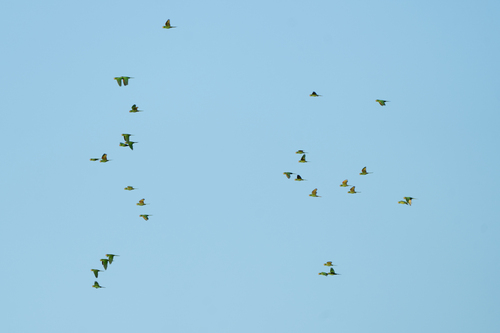
 Crimson-fronted Parakeet
Aratinga finschi

Brown-hooded Parrot
Pionopsitta haematotis
Global Distribution
Warmer areas are where this animal is recorded most often.
Parks Where Found
Quick answers
What are the chances of seeing a White-fronted Parrot in Carara National Park?
About 10% of wildlife watchers report a White-fronted Parrot sighting in Carara National Park, based on 265 verified sightings from GBIF citizen-science data.
When is the best time to see White-fronted Parrot in Carara National Park?
January has the highest sighting rate for White-fronted Parrot in Carara National Park in our monthly data.