


Willow Tit
Poecile montanus
- KingdomAnimalia (Animals)
- PhylumChordata (Chordates)
- ClassAves (Birds)
- OrderPasseriformes (Perching Birds)
- FamilyParidae (Tits, Chickadees, and Titmice)
- GenusPoecile (Chickadees and Allies)
- SpeciesPoecile montanus (Willow Tit)
About the Willow Tit
The willow tit (Poecile montanus) is a passerine bird in the tit family, Paridae. It is a widespread and common resident breeder throughout temperate and subarctic Europe and across the Palearctic. The plumage is grey-brown and off-white with a black cap and bib. It is more of a conifer specialist than the closely related marsh tit, which explains its breeding much farther north. It is resident, and most birds do not migrate.
The willow tit was described in 1827 by the Swiss naturalist Thomas Conrad von Baldenstein under the trinomial name Parus cinereus montanus. The type locality is the mountain forests in the Canton of Grisons, Switzerland. The willow tit is now placed in the genus Poecile that was erected by the German naturalist Johann Jakob Kaup in 1829. The genus name, Poecile, is the Ancient Greek name for a now unidentifiable small bird, and the specific montanus is Latin for "of the mountains".
Poecile was at one time treated as a subgenus within the genus Parus but molecular taxonomic analysis, using both nuclear and mitochondrial genes, supports Poecile as a distinct clade. Within Poecile, most of the Old World species (including the willow tit) form a separate... Wikipedia →
Closest Relatives at Ecrins National Park

Marsh Tit
Poecile palustris

Coal Tit
Periparus ater
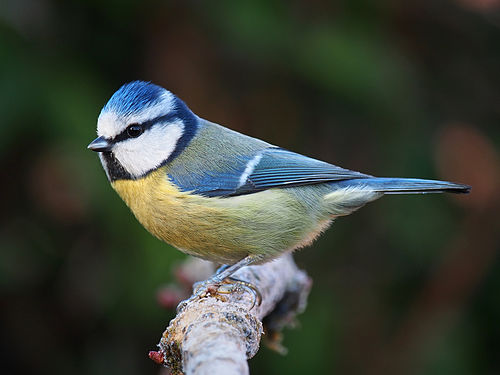
Blue Tit
Cyanistes caeruleus

Great Tit
Parus major

Crested Tit
Lophophanes cristatus

Chaffinch
Fringilla coelebs

Eurasian Blackbird
Turdus merula

Eurasian Goldfinch
Carduelis carduelis

Blackcap
Sylvia atricapilla

European Robin
Erithacus rubecula

Common Chiffchaff
Phylloscopus collybita

European Serin
Serinus serinus
Global Distribution
Where this species is recorded worldwide. Restricted to human observations from 2019 onwards — the same kind of record and the same period the probabilities on this page are built from, so collar-tracking studies, camera-trap arrays and museum specimens are excluded. Around Santa Rosa that removes 5,924 GPS fixes from a handful of tagged jaguars.
where this species is recorded (GBIF density — it tracks where observers go, not how likely a sighting is) · parks where it occurs — tap a pin for the sighting probability there
Parks Where Found
| # | Park | Country | Daily sighting probability |
|---|---|---|---|
| 1 | Nikko National Park | 🇯🇵 Japan | |
| 2 | Hohe Tauern National Park | 🇦🇹 Austria | |
| 3 | Triglav National Park | 🇸🇮 Slovenia | |
| 4 | Vanoise National Park | 🇫🇷 France | |
| 5 | Tatra National Park | 🇸🇰 Slovakia | |
| 6 | Mercantour National Park | 🇫🇷 France | |
| 7 | Białowieża National Park | 🇵🇱 Poland | |
| 8 | Biebrza National Park | 🇵🇱 Poland | |
| 9 | Bavarian Forest National Park | 🇩🇪 Germany | |
| 10 | Ecrins National Park | 🇫🇷 France | |
| 11 | Plitvice Lakes National Park | 🇭🇷 Croatia | |
| 12 | Gauja National Park | 🇱🇻 Latvia | |
| 13 | Wadden Sea National Park | 🇩🇪 Germany | |
| 14 | Snowdonia National Park | 🇬🇧 United Kingdom | |
| 15 | Fertő-Hanság National Park | 🇭🇺 Hungary | |
| 16 | Kiskunság National Park | 🇭🇺 Hungary | |
| 17 | Gobi Gurvansaikhan National Park | 🇲🇳 Mongolia |
Quick answers
What are the chances of seeing a Willow Tit in Ecrins National Park?
About 10% of wildlife watchers report a Willow Tit sighting in Ecrins National Park, based on 38 verified sightings from GBIF citizen-science data.
When is the best time to see Willow Tit in Ecrins National Park?
May has the highest sighting rate for Willow Tit in Ecrins National Park in our monthly data.