


Eurasian Blackbird
Turdus merula
- KingdomAnimalia (Animals)
- PhylumChordata (Chordates)
- ClassAves (Birds)
- OrderPasseriformes (Perching Birds)
- FamilyTurdidae (Thrushes)
- GenusTurdus (Typical Thrushes)
- SpeciesTurdus merula (Eurasian Blackbird)
About the Eurasian Blackbird
The common blackbird (Turdus merula) is a species of true thrush. It is also known as the Eurasian blackbird (especially in North America, to distinguish it from the unrelated New World blackbirds), or simply the blackbird. It breeds in Europe, western Asia, and North Africa, and has been introduced to Australia and New Zealand. It has a number of subspecies across its large range; a few former Asian subspecies are now widely treated as separate species. Depending on latitude, the common blackbird may be resident, partially migratory, or fully migratory.
The adult male of the common blackbird (Turdus merula merula, the nominate subspecies), which is found throughout most of Europe, is all black except for a yellow eye-ring and bill and has a rich, melodious song. The adult female and juvenile have mainly dark brown plumage. This species breeds in woods and gardens, constructing neat, cup-shaped nests bound together with mud. It is omnivorous, eating a wide range of insects, earthworms, berries, and fruits.
Both sexes are territorial on the breeding grounds and have distinctive threat displays. However, they are more gregarious during migration and in wintering areas. Pairs remain in their territory throughout the year if the climate is sufficiently temperate. This common and conspicuous species has given rise to a number of literary and cultural references, often related to its song. Wikipedia →
Closest Relatives at Ecrins National Park

Mistle Thrush
Turdus viscivorus

Fieldfare
Turdus pilaris

Song Thrush
Turdus philomelos

Ring Ouzel
Turdus torquatus

Redwing
Turdus iliacus

Chaffinch
Fringilla coelebs

Coal Tit
Periparus ater

Eurasian Goldfinch
Carduelis carduelis

Blackcap
Sylvia atricapilla

European Robin
Erithacus rubecula
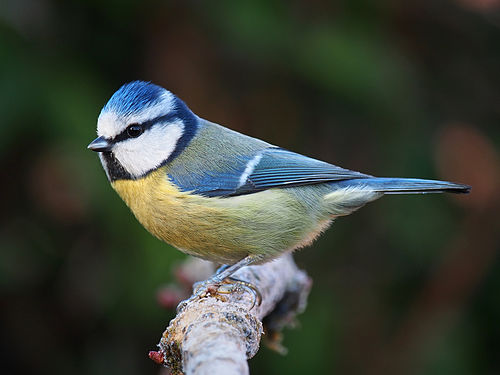
Blue Tit
Cyanistes caeruleus

Great Tit
Parus major
Global Distribution
Where this species is recorded worldwide. Restricted to human observations from 2019 onwards — the same kind of record and the same period the probabilities on this page are built from, so collar-tracking studies, camera-trap arrays and museum specimens are excluded. Around Santa Rosa that removes 5,924 GPS fixes from a handful of tagged jaguars.
where this species is recorded (GBIF density — it tracks where observers go, not how likely a sighting is) · parks where it occurs — tap a pin for the sighting probability there
Parks Where Found
Quick answers
What are the chances of seeing a Eurasian Blackbird in Ecrins National Park?
About 60% of wildlife watchers report a Eurasian Blackbird sighting in Ecrins National Park, based on 134 verified sightings from GBIF citizen-science data.
When is the best time to see Eurasian Blackbird in Ecrins National Park?
May has the highest sighting rate for Eurasian Blackbird in Ecrins National Park in our monthly data.