


Long-winged Harrier
Circus buffoni
Silhouette: Shyamal · PhyloPic
- KingdomAnimalia (Animals)
- PhylumChordata (Chordates)
- ClassAves (Birds)
- OrderAccipitriformes (Hawks, Eagles, Kites, and Allies)
- FamilyAccipitridae (Hawks, Eagles, and Kites)
- GenusCircus (Harriers)
- SpeciesCircus buffoni (Long-winged Harrier)
About the Long-winged Harrier
The long-winged harrier (Circus buffoni) is a common bird of prey species endemic to South America. They are members of the family Accipitridae, under the genus Circus which encompasses other harrier species. Its range encompasses most of South America, in grassland and wetland all across the continent. The long-winged harrier is a carnivorous bird, and will feed on many different animals found in its habitat.
Like owls and other harrier species, the long-winged harrier has a distinctive facial disc, which is used to triangulate the bird's hearing while it is hunting. The long-winged harrier is classified as a species of least concern by the IUCN Red List, however their population has been observed to decline due to habitat degradation by human activity.
The long-winged harrier was formally described in 1788 by the German naturalist Johann Friedrich Gmelin in his revised and expanded edition of Carl Linnaeus's Systema Naturae. He placed it with the falcons, eagles and their relatives in the genus Falco and coined the binomial name Falco buffoni. Gmelin based his description on the "Cayenne ringtail" that had been described in 1781 by the English ornithologist John Latham... Wikipedia →
Recent sightings of Long-winged Harrier in Emas National Park
LIVEiNaturalistClosest Relatives at Emas National Park
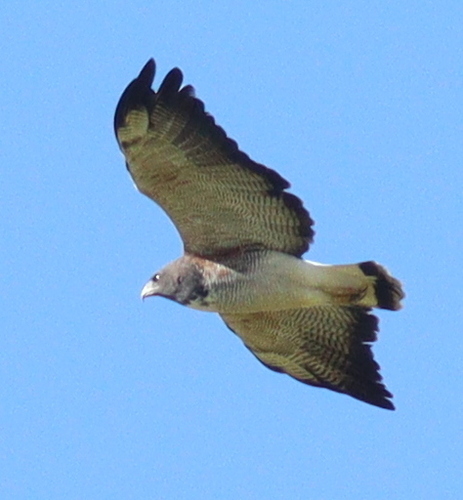
 White-tailed Hawk
Buteo albicaudatus

 Savanna Hawk
Buteogallus meridionalis

 Roadside Hawk
Rupornis magnirostris

 American Swallow-tailed Kite
Elanoides forficatus

 White-tailed Kite
Elanus leucurus

 Plumbeous Kite
Ictinia plumbea

Hook-billed Kite
Chondrohierax uncinatus

Chaco Eagle
Harpyhaliaetus coronatus

Crane Hawk
Geranospiza caerulescens

Short-tailed Hawk
Buteo brachyurus

Black-and-white Hawk-Eagle
Spizaetus melanoleucus

 Gray-headed Kite
Leptodon cayanensis
Global Distribution
Warmer areas are where this animal is recorded most often.
Parks Where Found
| # | Park | Country | Daily sighting probability |
|---|---|---|---|
| 1 | Iberá National Park | 🇦🇷 Argentina | |
| 2 | Emas National Park | 🇧🇷 Brazil | |
| 3 | Caroni Swamp | 🇹🇹 Trinidad and Tobago | |
| 4 | Parque Estadual Encontro das Águas | 🇧🇷 Brazil | |
| 5 | Chapada Diamantina National Park | 🇧🇷 Brazil | |
| 6 | Darién National Park | 🇵🇦 Panama | |
| 7 | Iguaçu National Park | 🇧🇷 Brazil | |
| 8 | Iguazú National Park | 🇦🇷 Argentina | |
| 9 | Noel Kempff Mercado National Park | 🇧🇴 Bolivia | |
| 10 | El Palmar National Park | 🇦🇷 Argentina | |
| 11 | Itatiaia National Park | 🇧🇷 Brazil | |
| 12 | Madidi National Park | 🇧🇴 Bolivia | |
| 13 | Sierra de la Macarena National Park | 🇨🇴 Colombia | |
| 14 | Tijuca National Park | 🇧🇷 Brazil | |
| 15 | Soberanía National Park | 🇵🇦 Panama |
Quick answers
What are the chances of seeing a Long-winged Harrier in Emas National Park?
About 30% of wildlife watchers report a Long-winged Harrier sighting in Emas National Park, based on 56 verified sightings from GBIF citizen-science data.
When is the best time to see Long-winged Harrier in Emas National Park?
September has the highest sighting rate for Long-winged Harrier in Emas National Park in our monthly data.