

Flinder's Ranges Rock-skink
Liopholis personata
Silhouette: David Orr · PhyloPic
- KingdomAnimalia (Animals)
- PhylumChordata (Chordates)
- ClassSquamata
- FamilyScincidae (Skinks)
- GenusLiopholis (Australian Desert and Rock Skinks)
- SpeciesLiopholis personata (Flinder's Ranges Rock-skink)
About the Flinder's Ranges Rock-skink
Liopholis personata is a species of skink, a lizard in the family Scincidae. The species is endemic to southern Australia. Wikipedia →
Recent sightings of Flinder's Ranges Rock-skink in Flinders Ranges National Park
LIVEiNaturalistClosest Relatives at Flinders Ranges National Park

 Shingleback Lizard
Tiliqua rugosa

 Tree Skink
Egernia striolata

Boulenger's Snake-eyed Skink
Morethia boulengeri

Gidgee Skink
Egernia stokesii

Eastern Striped Skink
Ctenotus robustus

Ragged Snake-eyed Skink
Cryptoblepharus pannosus

 Broad Banded Sand Swimmer
Eremiascincus richardsonii

Common Dwarf Skink
Menetia greyii

Shiny-palmed Shining-skink
Cryptoblepharus australis

Common Bluetongue
Tiliqua scincoides
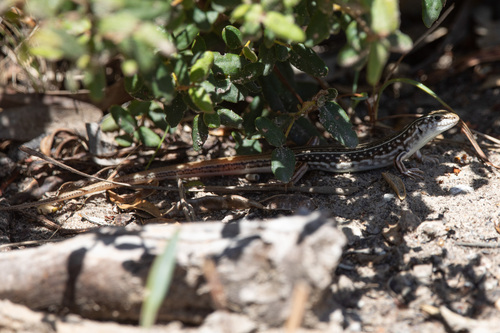
Oriental Ctenotus
Ctenotus orientalis
Global Distribution
Warmer areas are where this animal is recorded most often.
Parks Where Found
| # | Park | Country | Daily sighting probability |
|---|---|---|---|
| 1 | Flinders Ranges National Park | 🇦🇺 Australia |
More parks will be added in future updates.
Quick answers
What are the chances of seeing a Flinder's Ranges Rock-skink in Flinders Ranges National Park?
About 50% of wildlife watchers report a Flinder's Ranges Rock-skink sighting in Flinders Ranges National Park, based on 66 verified sightings from GBIF citizen-science data.
When is the best time to see Flinder's Ranges Rock-skink in Flinders Ranges National Park?
October has the highest sighting rate for Flinder's Ranges Rock-skink in Flinders Ranges National Park in our monthly data.