



Shiny-palmed Shining-skink
Cryptoblepharus australis
Silhouette: David Orr · PhyloPic
- KingdomAnimalia (Animals)
- PhylumChordata (Chordates)
- ClassSquamata
- FamilyScincidae (Skinks)
- GenusCryptoblepharus (Snake-eyed Skinks)
- SpeciesCryptoblepharus australis (Shiny-palmed Shining-skink)
About the Shiny-palmed Shining-skink
Cryptoblepharus australis, commonly called the inland snake-eyed skink, is a species of skink in the genus Cryptoblepharus. Pronunciation: KRIP-toe-BLEFF-ah-russ / oss-TRAH-liss Cryptoblepharus: 'hidden eyelid', referring to the fused eyelids.
Australis: 'southern', or more generally referring to Australia A major and much-needed revision of the genus was undertaken in 2007 by Paul Horner of the Northern Territory Museum, previously splitting this species into a bunch of species each of which occupies quite a distinct range occurring over Australia.
Paul Horner (2008), says Cryptoblepharus are unique species to the Territory. A study recently has found the top end is a hot spot for snake eyed skinks with one new discovery that was very exciting for herpetologist Paul Horner (2008).
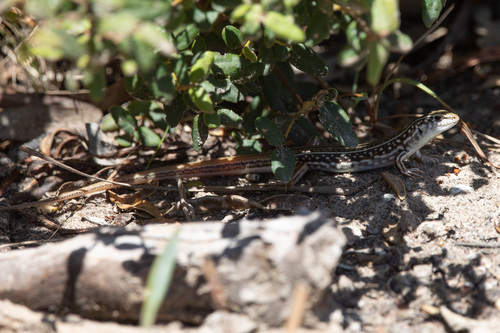
C. australis usually has quite distinct features: 6 supraciliary scales, 24 mid-body scale rows; smooth sub digital lamellae; immaculate, acute plantar scales. They are greyish in colour and have a longitudinal aligned body pattern. Cryptoblepharus snaked-eyed skink species live on vertical surfaces of rocks, trees and buildings which are challenging... Wikipedia →
Recent sightings of Shiny-palmed Shining-skink in Flinders Ranges National Park
LIVEiNaturalistClosest Relatives at Flinders Ranges National Park

 Ragged Snake-eyed Skink
Cryptoblepharus pannosus

Shingleback Lizard
Tiliqua rugosa

Flinder's Ranges Rock-skink
Liopholis personata

 Tree Skink
Egernia striolata

Boulenger's Snake-eyed Skink
Morethia boulengeri

Gidgee Skink
Egernia stokesii

Eastern Striped Skink
Ctenotus robustus

 Broad Banded Sand Swimmer
Eremiascincus richardsonii

Common Dwarf Skink
Menetia greyii

Common Bluetongue
Tiliqua scincoides
Oriental Ctenotus
Ctenotus orientalis
Global Distribution
Warmer areas are where this animal is recorded most often.
Parks Where Found
| # | Park | Country | Daily sighting probability |
|---|---|---|---|
| 1 | Uluru-Kata Tjuta National Park | 🇦🇺 Australia | |
| 2 | Flinders Ranges National Park | 🇦🇺 Australia |