



Gidgee Skink
Egernia stokesii
Silhouette: Kailah Thorn & Ben King · PhyloPic
- KingdomAnimalia (Animals)
- PhylumChordata (Chordates)
- ClassSquamata
- FamilyScincidae (Skinks)
- GenusEgernia (Spiny-tailed and Crevice Skinks)
- SpeciesEgernia stokesii (Gidgee Skink)
About the Gidgee Skink
Egernia stokesii is a gregarious species of lizard of the Scincidae family. This diurnal species is endemic to Australia, and is also known as the Gidgee skink, spiny-tailed skink, Stokes's skink and Stokes's egernia. The species forms stable, long-term social aggregations, much like the social groups seen in mammalian and avian species. This characteristic is rarely found in the Squamata order, but is widespread within the Australian subfamily of Egerniinae skinks. Populations of E. stokesii are widely distributed, but fragmented, and occur in semi-arid environments. There are three recognised subspecies. The conservation status for the species is listed as least concern, however, one subspecies is listed as endangered.
Egernia stokesii range in colour from olive to reddish brown, with lighter ventral scales that range from white to yellow. The species often displays scatterings of lighter coloured dorsal scales. The dorsal scales are keeled from the back of the neck to the tail and spiny tail scales are a prominent feature of the species. The tail is flattened rather than cylindrical, and shorter than the head and body of the animal, at approximately... Wikipedia →
Recent sightings of Gidgee Skink in Flinders Ranges National Park
LIVEiNaturalistClosest Relatives at Flinders Ranges National Park

 Tree Skink
Egernia striolata

 Shingleback Lizard
Tiliqua rugosa

Flinder's Ranges Rock-skink
Liopholis personata

Boulenger's Snake-eyed Skink
Morethia boulengeri

Eastern Striped Skink
Ctenotus robustus

Ragged Snake-eyed Skink
Cryptoblepharus pannosus

 Broad Banded Sand Swimmer
Eremiascincus richardsonii

Common Dwarf Skink
Menetia greyii

Shiny-palmed Shining-skink
Cryptoblepharus australis

Common Bluetongue
Tiliqua scincoides
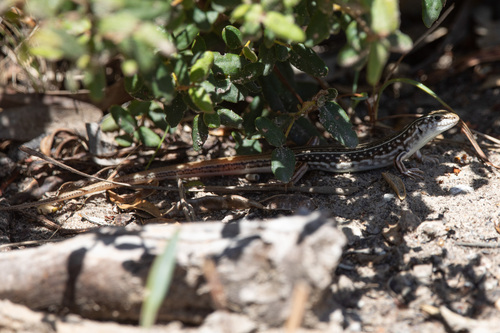
Oriental Ctenotus
Ctenotus orientalis
Global Distribution
Warmer areas are where this animal is recorded most often.
Parks Where Found
| # | Park | Country | Daily sighting probability |
|---|---|---|---|
| 1 | Flinders Ranges National Park | 🇦🇺 Australia |
More parks will be added in future updates.
Quick answers
What are the chances of seeing a Gidgee Skink in Flinders Ranges National Park?
About 20% of wildlife watchers report a Gidgee Skink sighting in Flinders Ranges National Park, based on 10 verified sightings from GBIF citizen-science data.
When is the best time to see Gidgee Skink in Flinders Ranges National Park?
December has the highest sighting rate for Gidgee Skink in Flinders Ranges National Park in our monthly data.